1. The Spirit of Manaslu: Why It Is the Ultimate Teahouse Circuit in Nepal
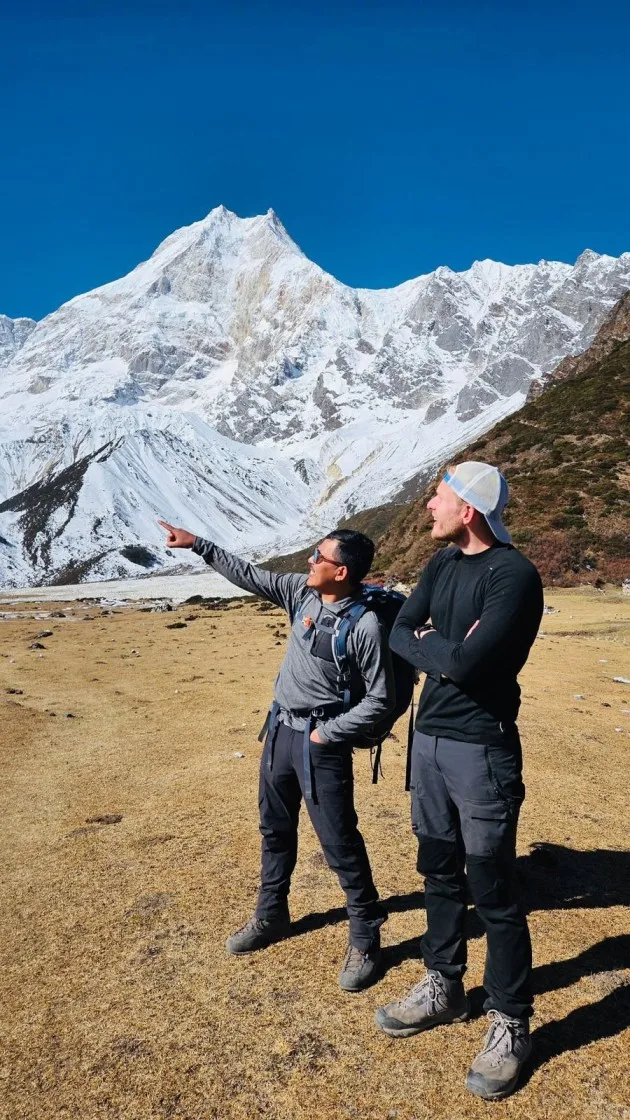
Rising majestically in west-central Nepal, Mount Manaslu (8,163m / 26,781ft) is known locally as Kutang—derived from the Sanskrit word Manasa, meaning "Mountain of the Spirit."
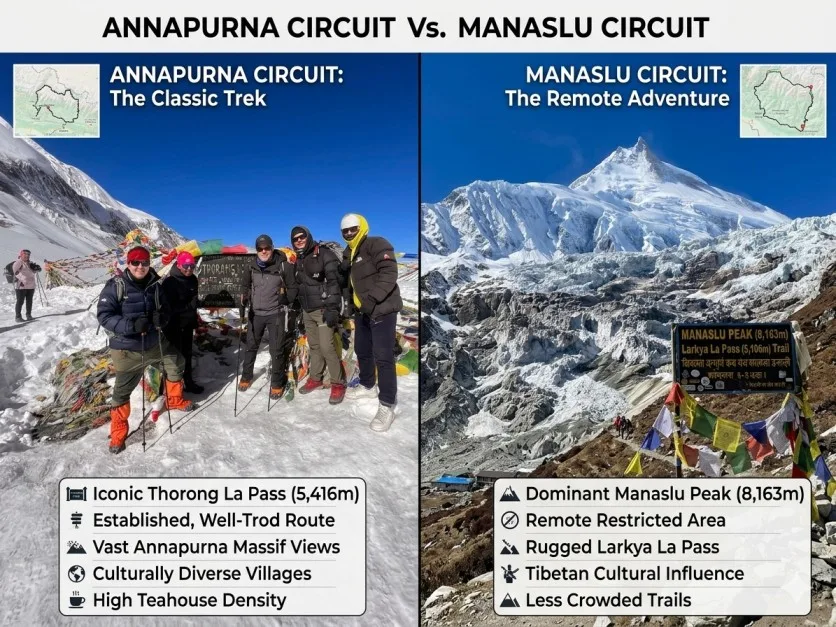
While commercial trekking highways like the Annapurna Circuit have seen dirt roads encroach on classic footpaths, the Manaslu Circuit has preserved its authentic, wild soul:
- Zero Roads on the High Trail: Once you leave Machha Khola, the entire upper valley through Jagat, Namrung, Samagaon, and over Larkya La to Bimthang is 100% road-free footpath, traversed only by hikers, local villagers, and yak caravans.
- Controlled Low Crowds: Because the Nepal Department of Immigration classifies Manaslu as a restricted zone requiring special permits, only 9,000 to 11,000 trekkers visit each year—compared to over 40,000 on the Annapurna trail and 35,000 at Everest Base Camp.
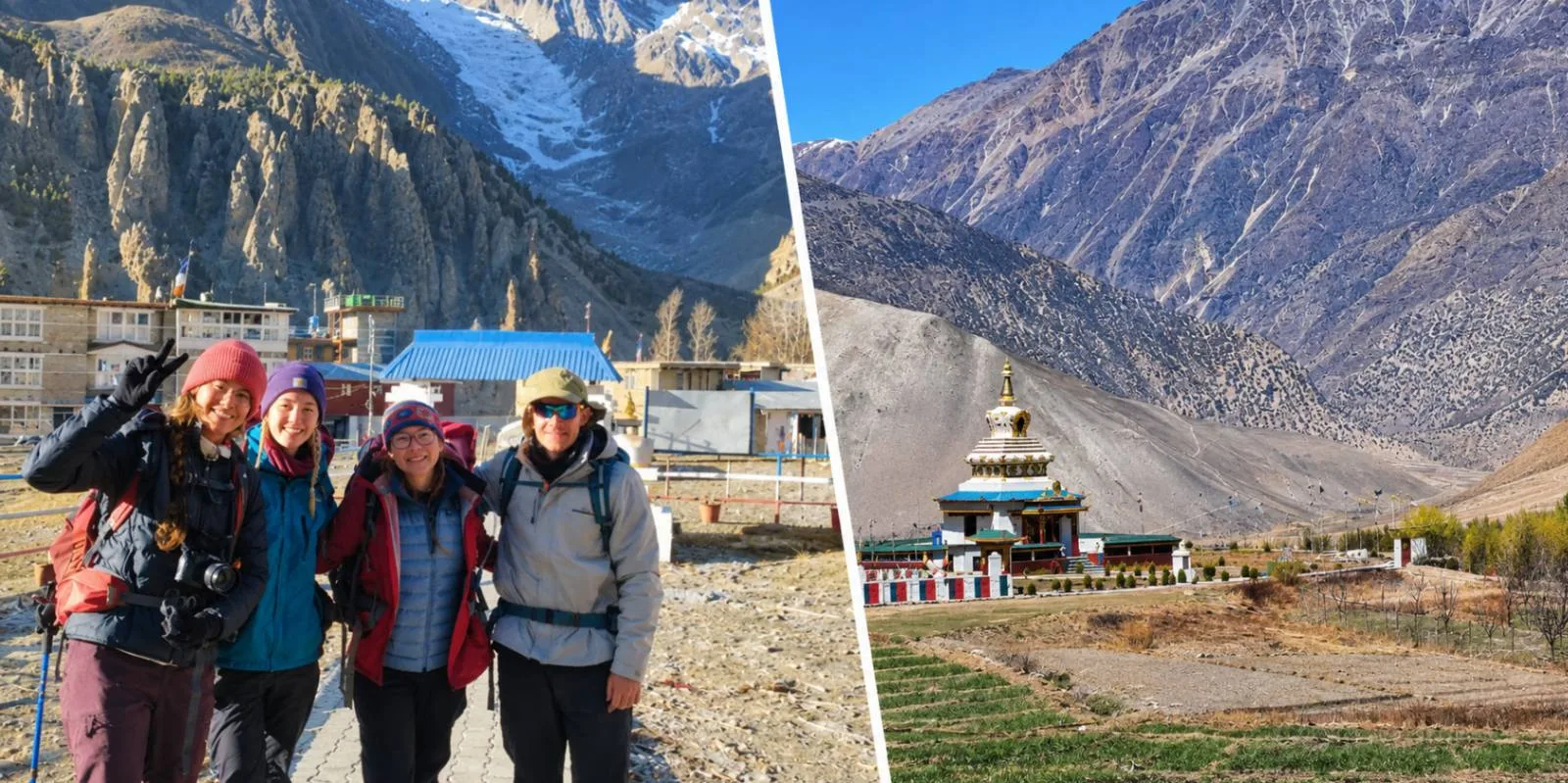
- Untouched Tibetan Cultural Sanctuary: The upper valley (Nubri) was closed to foreign travelers until 1992. The local inhabitants, of direct Tibetan lineage, speak the Nubri dialect, wear traditional woolen chubas, and preserve centuries-old Buddhist monastic traditions virtually untouched by the modern world.
2. Master Day-by-Day Itinerary & Elevation Matrix (14-Day Circuit)
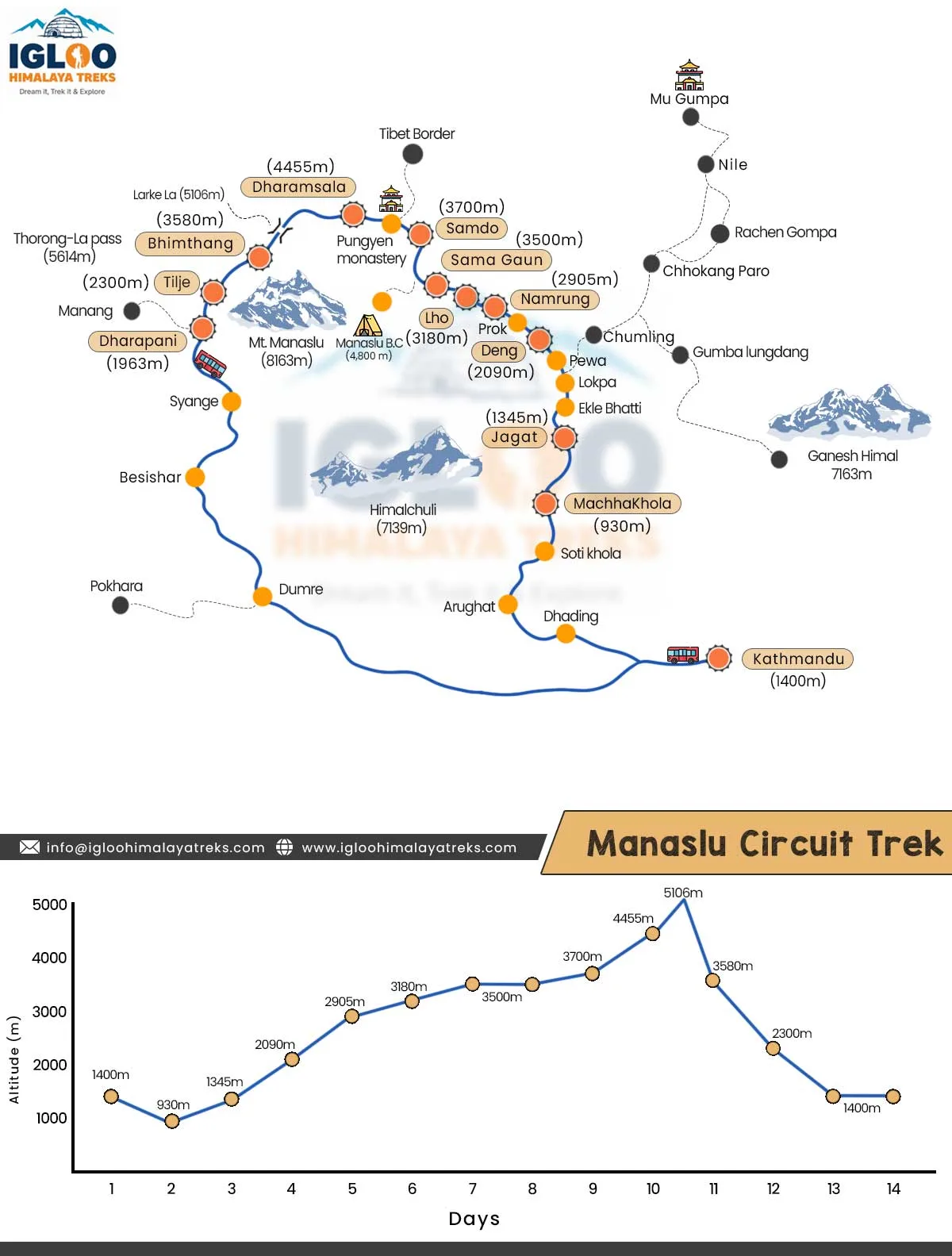
The standard 14-day Manaslu Circuit is an expertly paced itinerary designed for optimal altitude acclimatization and safety:
| Day & Route Segment | Distance | Elevation Gain / Loss | Hiking Hours | Terrain & Difficulty Rating |
|---|---|---|---|---|
| Day 01: Kathmandu to Machha Khola | 160 km (Drive) | 1,400m → 900m | 7 – 8 hrs drive | Moderate: Bumpy 4WD mountain road via Arughat |
| Day 02: Machha Khola to Jagat | 22.2 km | 900m → 1,410m (+510m) | 6 – 7 hrs | Moderate: River canyon trails; Tatopani hot springs |
| Day 03: Jagat to Deng | 19.8 km | 1,410m → 1,804m (+394m) | 6 – 7 hrs | Moderate: Entering restricted area; bamboo gorges |
| Day 04: Deng to Namrung | 19.5 km | 1,804m → 2,660m (+856m) | 6 – 7 hrs | Strenuous: Sustained stone stair climbing; pine forests |
| Day 05: Namrung to Lho Village | 10.5 km | 2,660m → 3,180m (+520m) | 4 – 5 hrs | Moderate: First spectacular view of Manaslu; Ribung Gompa |
| Day 06: Lho to Samagaon | 8.2 km | 3,180m → 3,530m (+350m) | 3.5 – 4 hrs | Easy-Moderate: Wide alpine valley; ancient Mani walls |
| Day 07: Samagaon Acclimatization Day | 6 – 12 km | 3,530m ↔ 3,691m / 4,400m | 4 – 6 hrs | Active Rest: Day hike to Birendra Lake or Pungyen Gompa |
| Day 08: Samagaon to Samdo | 8.5 km | 3,530m → 3,860m (+330m) | 3.5 – 4 hrs | Easy-Moderate: Yak pastures; proximity to Tibetan border |
| Day 09: Samdo to Dharamsala (Larkya Phedi) | 11.7 km | 3,860m → 4,460m (+600m) | 4.5 – 5 hrs | Strenuous: Thin air; high mountain lodge staging ground |
| Day 10: Larkya La Pass (5,160m) to Bimthang | 24.5 km | 4,460m → 5,160m → 3,720m | 8 – 9 hrs | Peak Crux: Pre-dawn moraine push; steep scree descent |
| Day 11: Bimthang to Tilije | 26.0 km | 3,720m → 2,300m (-1,420m) | 6 – 7 hrs | Moderate: Stunning rhododendron and pine forest descent |
| Day 12: Tilije to Dharapani | 8.0 km | 2,300m → 1,860m (-440m) | 2.5 – 3 hrs | Easy: Joining the classic Annapurna trail junction |
| Day 13: Dharapani to Besisahar | 35 km (Jeep) | 1,860m → 760m | 3.5 hrs jeep | Easy: 4WD jeep drive down Marsyangdi river valley |
| Day 14: Besisahar to Kathmandu | 175 km (Drive) | 760m → 1,400m | 5 – 6 hrs drive | Easy: Return highway drive to capital city |
3. Mandatory Permits & Strict Restricted Area Regulations in 2026
Because the northern Manaslu region borders the sensitive Tibet Autonomous Region of China, the Nepal Department of Immigration enforces strict legal regulations:
The Three Statutory Regulations
- Minimum Group Size: You must have a minimum of two foreign passport holders. Individual solo permits cannot be legally issued by immigration.
- Mandatory Government-Licensed Guide: You must be accompanied throughout the entire trek by a certified guide licensed by the Nepal Academy of Tourism and Hotel Management (NATHM).
- Registered Agency Processing: Permits cannot be purchased independently by travelers. They must be submitted and processed by a government-registered trekking agency (such as Igloo Himalaya Treks).
Itemized Permit Fees (2026–2027)
- Manaslu Restricted Area Permit (MRAP):
- Autumn (Sep – Nov): $100 USD per person for the first 7 days, plus $15 USD/day for additional days.
- Spring, Winter & Summer (Dec – Aug): $75 USD per person for the first 7 days, plus $10 USD/day for additional days.
- Manaslu Conservation Area Permit (MCAP): NPR 3,000 (~$23 USD) per person.
- Annapurna Conservation Area Permit (ACAP): NPR 3,000 (~$23 USD) per person (required because the trek exits through Dharapani in the Annapurna district).
4. Larkya La Pass Crossing (5,160m): Tactical Crux & Pass Mechanics
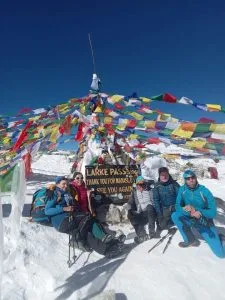
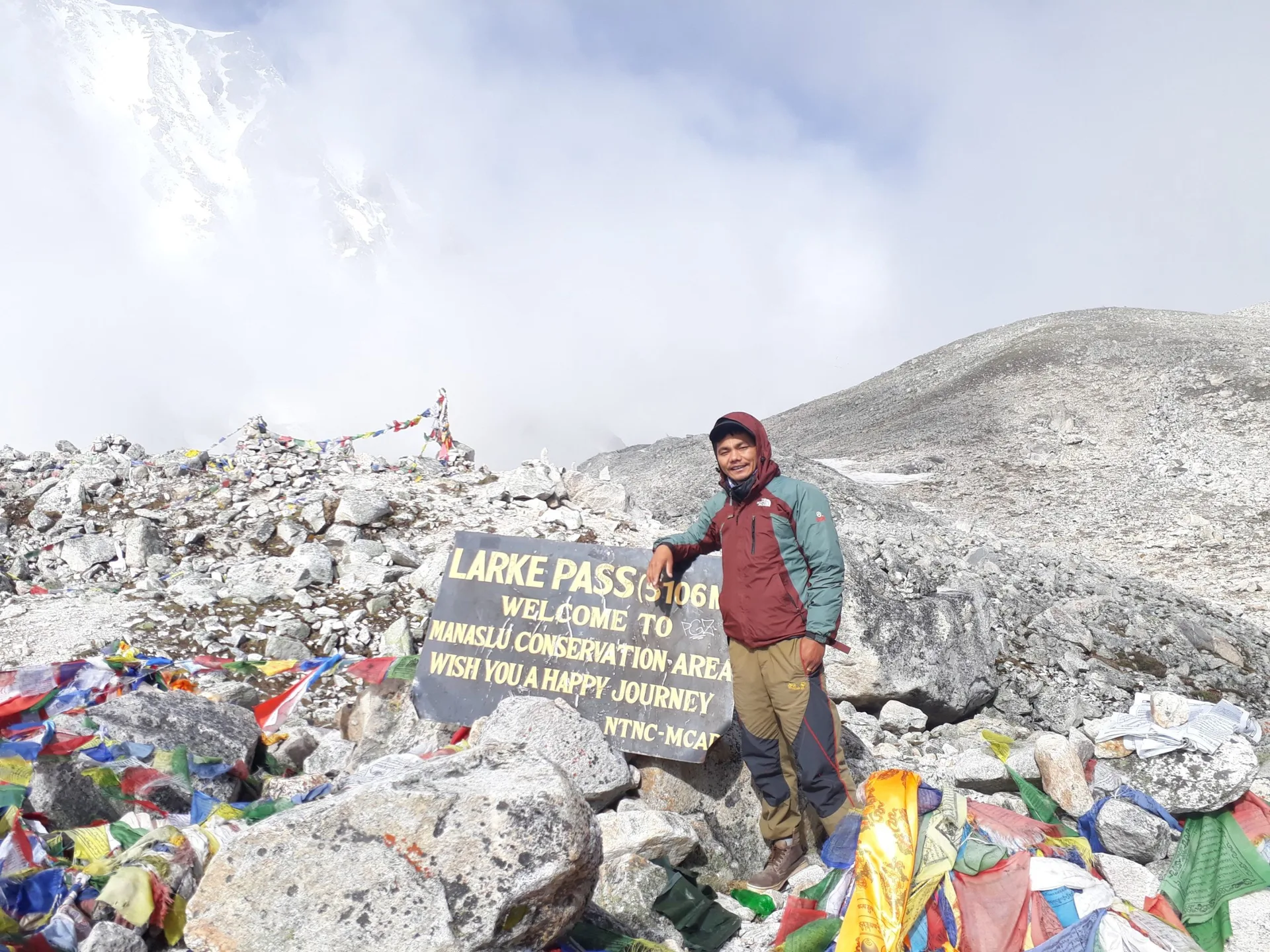
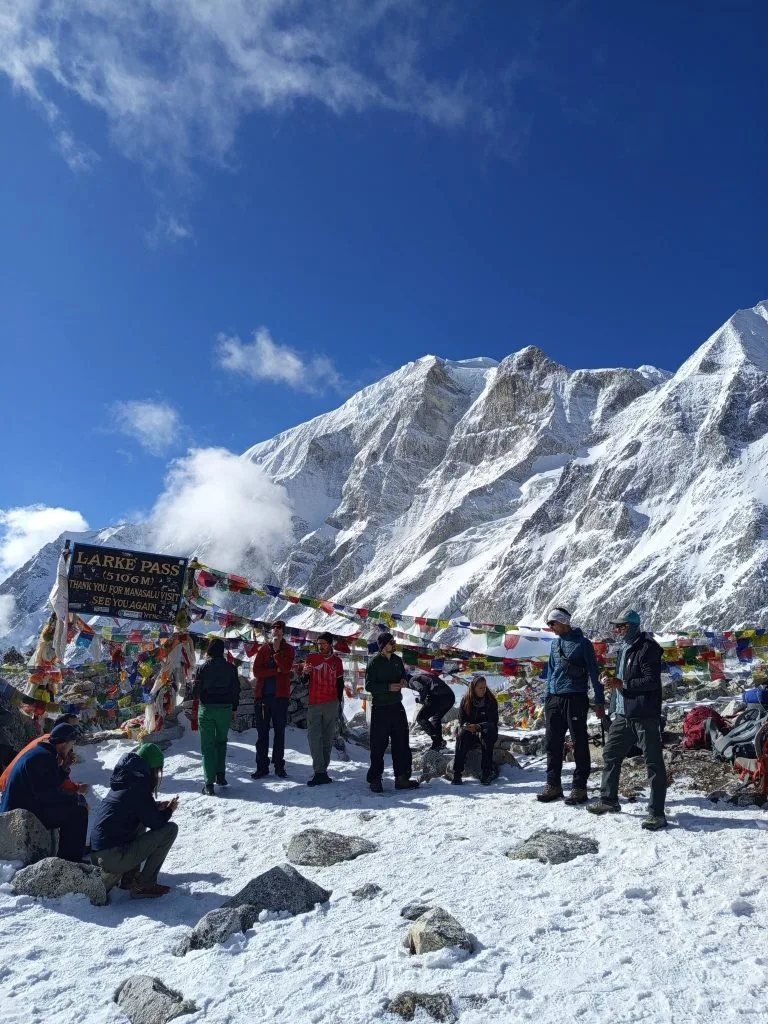
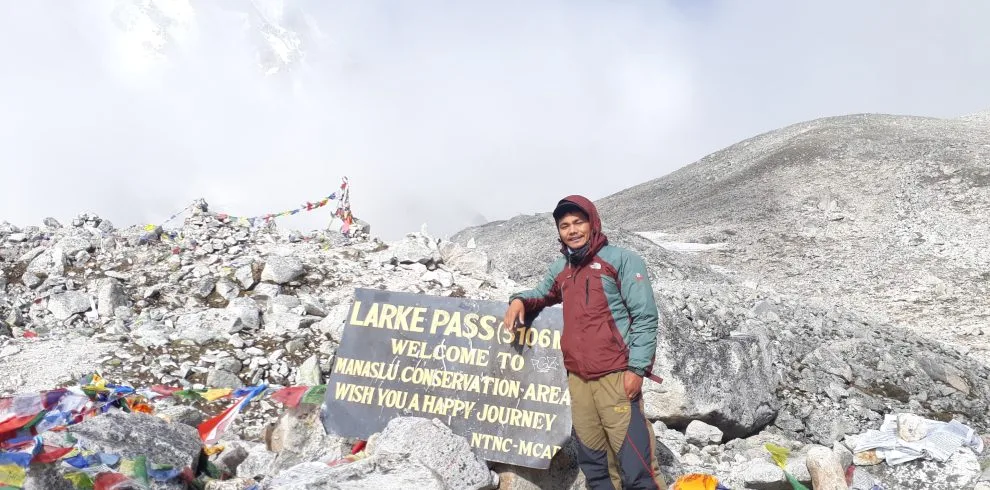
Crossing the Larkya La Pass (5,160m / 16,929ft) on Day 10 is the physical, mental, and emotional climax of the Manaslu Circuit:
- Pre-Dawn 3:30 AM Departure: The day begins in the freezing dark at Dharamsala (4,460m). You eat a warm porridge breakfast by headlamp and step into the biting sub-zero alpine air (-10°C to -18°C). Early departure is mandatory to crest the pass before afternoon winds and whiteouts arrive.
- The Ascent Mechanics: A steady 3.5 to 4.5 hour climb (+700m vertical gain) over frozen glacial moraines, past blue alpine tarns, and across rolling snow ridges. Under ~52% oxygen, the key is the rhythmic Sherpa "rest step"—locking the rear knee momentarily on each stride to rest the quadriceps.
- The Summit Panorama: The pass crest is marked by massive cairns draped in thousands of colorful Buddhist prayer flags. Looking west and north reveals an awe-inspiring 360-degree amphitheater: Himlung Himal (7,126m), Cheo Himal (6,820m), Gyaji Kang, Kang Guru (6,981m), and the icy massif of Annapurna II (7,937m).
- The Knee-Jarring Descent (-1,440m): Descending from the pass down to Bimthang (3,720m) takes 4 to 5 hours across steep loose scree, snow banks, and lateral moraines. Dual trekking poles and lightweight microspikes are indispensable to prevent slipping on hard-packed snow.
5. Acclimatization Strategy: Samagaon, Birendra Lake & Manaslu Base Camp
Acclimatization on the Manaslu Circuit is naturally assisted by the long, gradual walk up the Budhi Gandaki river canyon over 6 days. However, Day 7 in Samagaon (3,530m) is the non-negotiable medical pivot point of the trek:
Hike A: Birendra Lake (3,691m)
A gentle 3-hour round-trip walk to an awe-inspiring turquoise glacial lake sitting at the snout of the Manaslu glacier. Huge chunks of ice calve into the lake beneath the soaring north face of Manaslu. Ideal for relaxing active acclimatization.
Hike B: Pungyen Gompa (4,050m)
A 5- to 6-hour round-trip hike ascending a hidden alpine valley to a 400-year-old cliffside monastery. Delivers the absolute best direct panoramic views of Manaslu's east face and provides a perfect "climb high, sleep low" altitude stimulus.
Hike C: Manaslu Base Camp (4,800m)
For exceptionally fit trekkers, this rigorous 7- to 8-hour round-trip climb ascends directly to the crampon point and mountaineers' tent city at 4,800 meters. Offers breathtaking close-up views of the Manaslu icefall.
6. Nubri & Tsum Cultural Heritage: Ancient Monasteries & Mani Walls
Trekking through the Nubri Valley is like stepping back into medieval Tibet:
- The Longest Mani Walls in the Himalayas: As you enter Lho and Samagaon, you will pass monumental stone Mani walls stretching over 200 meters, meticulously carved with the sacred mantra "Om Mani Padme Hum" by generations of Buddhist monks.
- Ribung Gompa (Lho Village): Perched on a forested ridge directly framing the twin peaks of Mount Manaslu, Ribung Gompa houses over 100 young novice monks studying ancient Nyingma Buddhist texts.
- Sacred Trail Etiquette: Always circumambulate all chortens, stupas, and Mani walls clockwise (keeping the monument on your right shoulder). Never step over prayer flags, remove shoes before entering temple prayer halls, and ask permission before photographing resident lamas.
8. Trail Terrain & Geological Transitions: Subtropical Canyons to Glacial Moraines
Few treks on Earth traverse such a magnificent sequence of bioclimatic life zones:
Lower River Gorges (900m – 2,000m)
Warm, humid subtropical terrain hugging the roaring Budhi Gandaki river. Narrow rocky paths carved into sheer vertical cliffs, lush bamboo groves, cascading waterfalls, and spectacular steel cantilever suspension bridges bolted directly into sheer granite rockfaces.
Alpine Basin & Moraines (3,000m – 5,160m)
Dense fir and birch forests transition into broad alpine pastures where yaks graze. Beyond Samdo, vegetation gives way to barren glacial moraines, jagged scree slopes, lateral moraines, and the high-altitude permafrost of Larkya La Pass.
9. Teahouse Realities & Accommodation Standards Along the Circuit
Over the past five years, accommodation along the Manaslu Circuit has evolved from rudimentary homestays into comfortable, well-managed teahouse lodges:
- Lower Valley Lodges (Machha Khola to Namrung): Stone-built lodges with clean twin rooms, western-style flush toilets, hot solar/gas showers, and mobile charging in dining halls.
- High Valley Outposts (Samagaon & Samdo): Comfortable, atmospheric timber lodges with warm communal dining halls heated by central wood or dried yak-dung stoves. Bedrooms are unheated, requiring a four-season -15°C down sleeping bag.
- Dharamsala / Larkya Phedi (4,460m): The highest and most rustic staging post. Accommodations consist of basic stone rooms and prefabricated dormitories. Beds are limited during peak October and April months, making advance booking through an authorized agency essential.
10. Food, Nutrition & Safe Hydration on Remote Trails
Fueling your body with wholesome mountain nutrition is critical for sustained endurance:
- Dal Bhat Power: The legendary staple of lentils, steamed rice, vegetable curry, and spicy pickles remains the best meal on the trail. It is freshly cooked, easily digestible, and comes with free unlimited refills.
- Local Tibetan Specialties: Enjoy Tibetan flatbread with yak cheese, buckwheat pancakes, tsampa porridge (roasted barley flour), vegetable momos, and hot noodle soups (Thukpa and Sherpa stew).
- Meat Advisory: Beyond Namrung, religious Buddhist traditions prohibit animal slaughter. Meat carried up from lower valleys is unrefrigerated. We strongly advise adhering to a 100% vegetarian diet above Namrung to prevent digestive illnesses.
- Hydration: Drink 4 to 5 liters of fluid daily. Use chlorine dioxide purification tablets or a SteriPEN UV device rather than buying single-use plastic bottles.
11. Seasonal Weather Windows: Autumn vs. Spring vs. Winter vs. Monsoon
| Season | Months | Weather & Trail Conditions | Larkya La Pass Accessibility |
|---|---|---|---|
| Autumn (Peak) | Oct – Nov | Crystal-clear blue skies, minimal precipitation, crisp mountain views, stable high pressure. | Open & Prime: Dry trails, manageable snow on saddle. |
| Spring (Prime) | Mar – May | Blooming rhododendrons in lower valleys; warming days; snow melting; active mountaineering. | Open: Snowpack on pass; microspikes recommended. |
| Winter | Dec – Feb | Severe freezing cold (-20°C at Dharamsala); heavy snow storms; lodge closures. | Frequently Closed: Deep snow blocks Larkya La pass. |
| Monsoon | Jun – Aug | Heavy rainfall; active landslides in Budhi Gandaki gorge; swollen rivers; leeches. | High Hazard: Landslide road blockages; not recommended. |
12. Physical Demands & Fitness Preparation for the Manaslu Circuit
The Manaslu Circuit is officially rated as STRENUOUS. You will hike an average of 15 to 22 kilometers daily (5 to 7 hours) carrying a 5kg to 7kg daypack:
- Aerobic Base (Zone 2 Cardio): Perform 45 to 60 minutes of incline treadmill walking, cycling, or trail running 3 times per week to build mitochondrial density.
- Stair Climbing: Train on the gym StairMaster for 45 minutes wearing a 6kg backpack to prepare for thousands of stone switchbacks.
- Eccentric Leg Conditioning: Bulgarian split squats, weighted box step-downs, and goblet squats condition quadriceps to absorb the brutal 1,440-meter descent from Larkya La down to Bimthang.
13. Comprehensive Packing List & Remote Expedition Gear
Because Manaslu is remote with limited gear shops above Namrung, your packing list must be complete:
- Clothing Layers: 2x merino wool thermal base layers, 1x mid-layer fleece, 1x 800-fill down jacket with hood, 1x Gore-Tex waterproof/windproof shell jacket, 2x quick-dry trekking pants.
- Footwear: Broken-in waterproof trekking boots with ankle support, 4x pairs of merino wool hiking socks, 1x pair of lightweight camp shoes/crocs.
- Pass Crux Equipment: Lightweight walking microspikes / trail crampons (vital for the icy descent from Larkya La), dual adjustable trekking poles, UV Category 4 sunglasses.
- Sleeping & Warmth: -15°C to -20°C four-season down sleeping bag (complimentary on Igloo Himalaya Treks tours), sleeping bag silk liner.
- Electronics & Power: 20,000 mAh power bank (cold drains batteries fast!), USB cables, headlamp with extra lithium batteries.
14. Medical Safety, Altitude Sickness & Emergency Evacuation
Managing high-altitude health in a remote restricted valley requires professional protocols:
- Daily Oximeter Monitoring: Certified guides from Igloo Himalaya Treks log blood oxygen saturation (SpO2) and pulse every morning and evening.
- Lake Louise AMS Scoring: Any headache, nausea, or dizziness is immediately assessed. Ascending with symptoms of Acute Mountain Sickness is strictly prohibited.
- Helicopter Evacuation Protocol: While mobile signals are dead on high passes, guides carry satellite communicators (Garmin inReach). In the event of acute altitude sickness (HAPE/HACE) or serious trauma, emergency rescue helicopters from Kathmandu can land at Samagaon, Samdo, or Bimthang within 60 to 90 minutes. Ensure your travel insurance covers helicopter rescue up to 6,000 meters.
15. Cost Breakdown & Budgeting: How Much Does the Manaslu Circuit Cost?
Because of mandatory guide requirements and special immigration permits, the Manaslu Circuit is typically booked as an all-inclusive package through a registered local agency:
| Expense Category | Estimated Cost (USD) | Inclusions & Details |
|---|---|---|
| All-Inclusive 14-Day Package | $1,250 – $1,550 / person | Round-trip private 4WD jeep transport, all 3 permits, licensed guide, insured porter, all 3 daily meals, teahouse rooms, and free down gear rental. |
| Restricted Permits Only | $170 – $200 / person | MRAP ($100 Autumn / $75 Spring) + MCAP ($23) + ACAP ($23). |
| Trail Add-Ons (Showers, Charging, Wi-Fi) | $60 – $90 / person | Hot bucket showers ($4–$6), phone charging ($3–$5), Wi-Fi cards ($15). |
| Staff Tipping | $120 – $180 / person | Customary pooled tips for guide ($15–$20/day) and porter ($10–$15/day). |
Frequently Asked Questions (FAQ) About the Manaslu Circuit Trek
Select a category below to explore expert answers to the most common questions travelers ask about Manaslu Circuit Trek Guide:
General & Planning
Ready to Experience the Himalayas?
Whether you are preparing for high-altitude trekking, cultural circuits, or alpine summit expeditions, start planning a bespoke journey tailored to your fitness, travel season, and style.