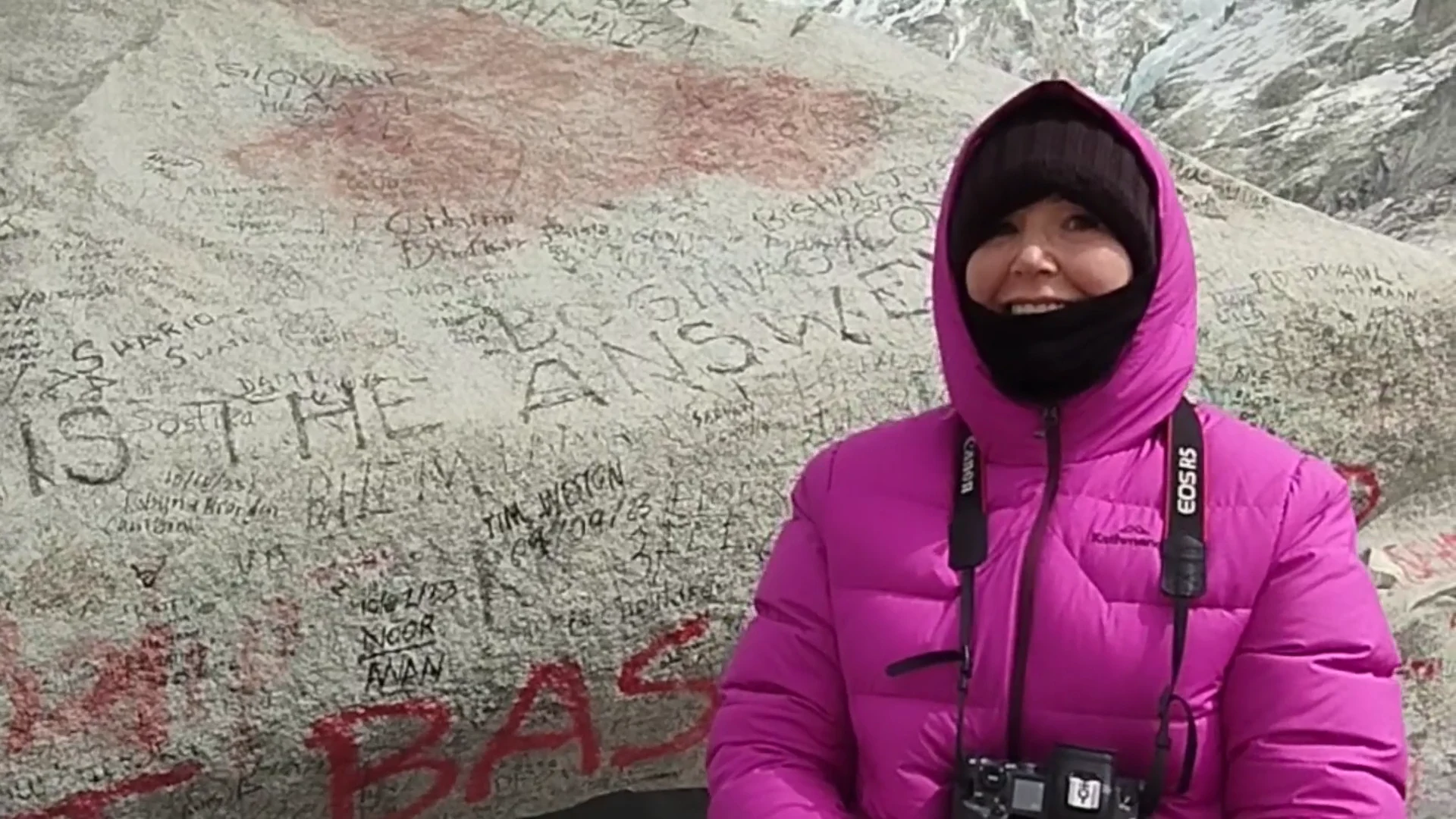
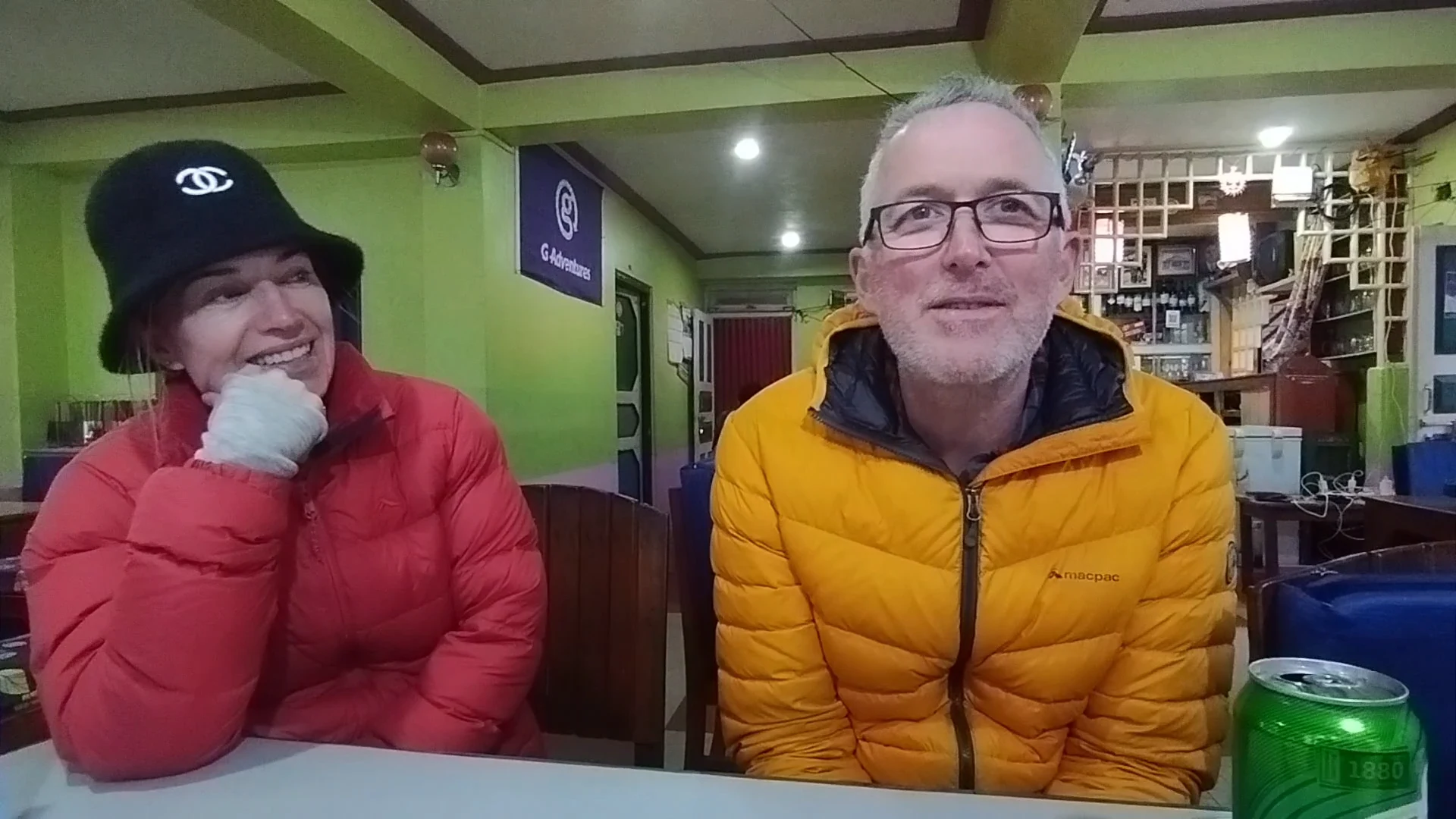
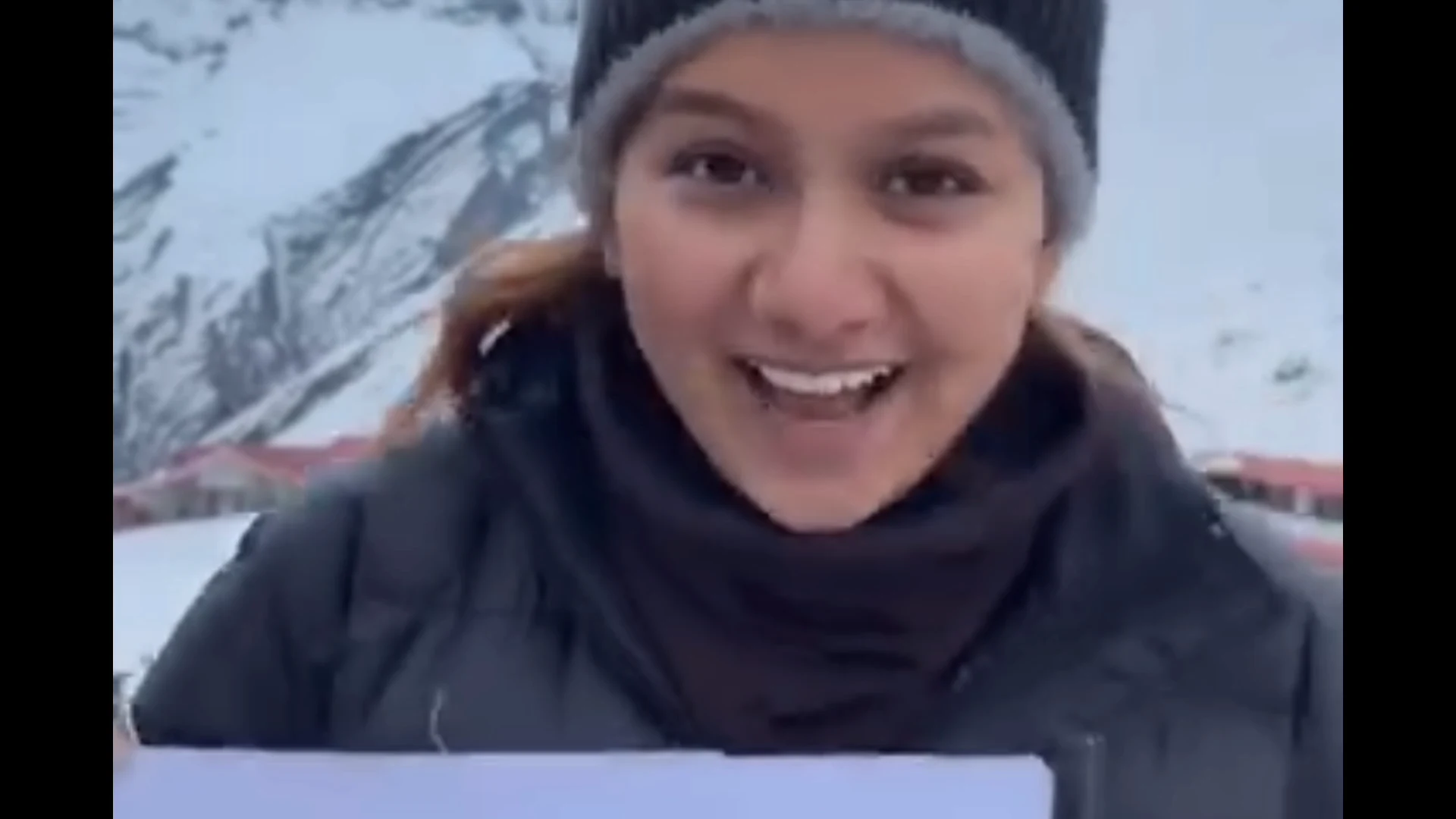
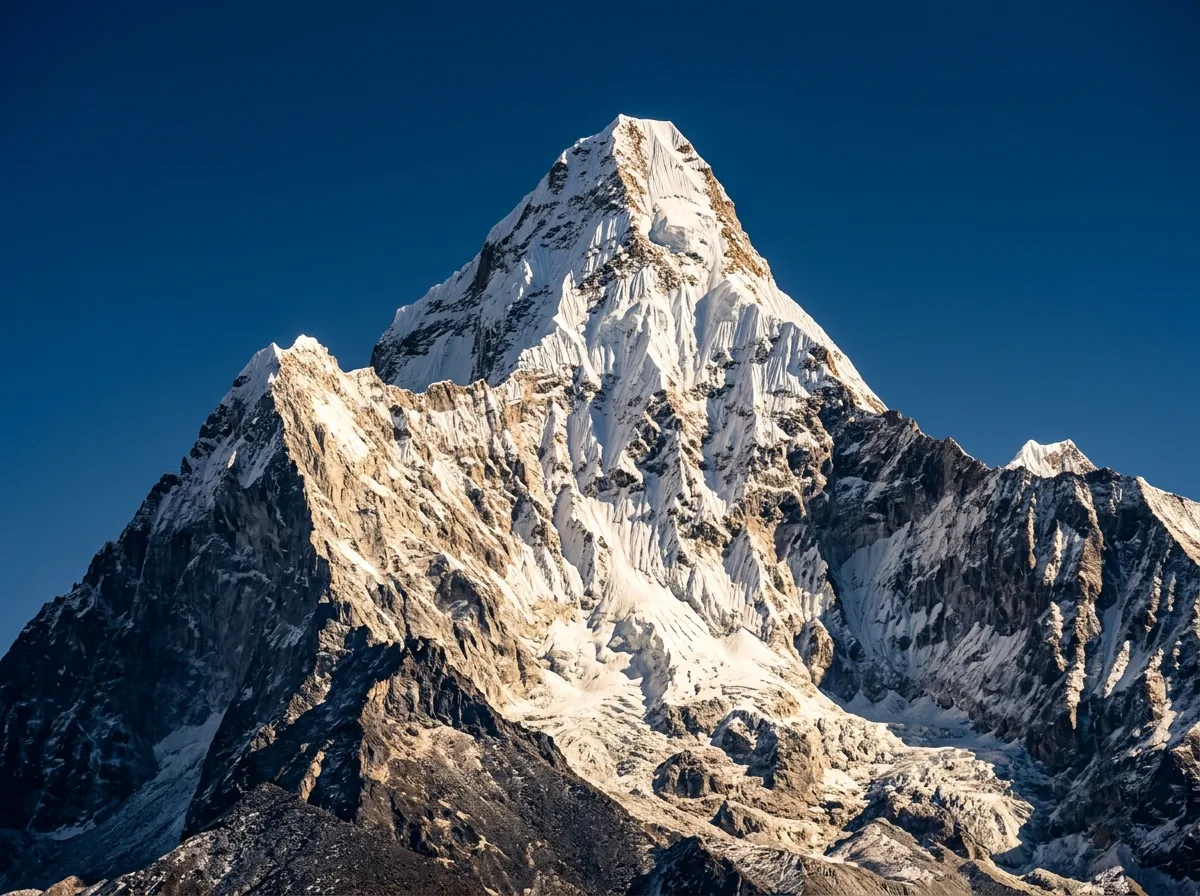
Combining Everest Base Camp with Cho La and Renjo La passes gave us the ultimate Khumbu journey. Cho La glacier crossing was thrilling but felt totally secure with our lead Sherpa guide Sagar, and the viewpoint from Renjo La overlooking Gokyo Lakes and Mount Everest at dawn was pure magic. Down in Thame, the valley was peaceful and authentic. Exceptional organization, delicious food, and impeccable safety standards from Igloo Himalaya Treks!
Everest Region • Dual High Pass Circuit
5.0
reviews on TripAdvisor
5.0
194 reviews on Google
Everest Cho La and Renjo La Pass Trek — 19 Days
Reach Everest Base Camp, hike Kala Patthar and cross Cho La and Renjo La on this 19-day circuit through the Khumbu. The route follows Namche Bazaar, Tengboche and Dingboche before turning towards Dzongla and the Gokyo Lakes.
Travelers' Choice
Best of the Best 2026
DURATION
19 Days
Including 16 days on the trekking route
DIFFICULTY
Very Challenging
High altitude, glacier terrain and two high passes
MAXIMUM ALTITUDE
5,545 m / 18,192 ft
Kala Patthar viewpoint
DESTINATION
Nepal
Sagarmatha National Park, Khumbu
ACTIVITY
Trekking
High-pass Himalayan circuit
ACCOMMODATION
18 Nights Total
2 nights 3-star Kathmandu hotel & 16 nights in teahouses
TRANSPORT
Flights & Transfers
Return Lukla flights & private ground transfers; may operate via Manthali
MEALS
Kathmandu Breakfast + Full Board
Trek meals with tea/coffee, dinner fruit & Snickers + farewell dinner
RECOMMENDED SEASON
Spring & Autumn
March–May & September–November, subject to pass conditions
TREK STARTS
Lukla (2,860 m)
Mountain airstrip in Everest region
TREK ENDS
Lukla (2,860 m)
Scenic mountain airstrip return
TREK REGION
Everest / Khumbu
Sagarmatha National Park, Eastern Nepal
PACKAGE START POINT
Kathmandu
Airport pickup & briefing hotel
PACKAGE END POINT
Kathmandu
Airport drop-off for departure
Everest Two Passes Trek Overview
Our 19-day Everest Two Passes Trek combines Everest Base Camp, Kala Patthar and Gokyo Lakes with crossings of Cho La and Renjo La. You follow the main Khumbu trail through Namche and Dingboche before turning towards Gokyo. After hiking Gokyo Ri, cross into the western valley and return through Lungden and Thame towards Namche Bazaar.
After flying to Lukla, walk through Phakding and cross suspension bridges before climbing to Namche Bazaar. We spend two nights here, including an acclimatisation hike above the town. Continue through Tengboche, where a monastery stands beneath Ama Dablam, and onwards to Dingboche. Village homes, mani walls and prayer wheels reflect the Buddhist traditions of the Khumbu, while forest paths gradually give way to open slopes and rocky ground.
Beyond Dingboche, continue through Lobuche to Gorak Shep for the Everest Base Camp visit. Hike Kala Patthar the following morning, then follow the trail towards Dzongla. Cho La links this side of the Khumbu with Thangnak and Gokyo. After Gokyo Ri, cross Renjo La and descend through Lungden and Thame, completing the circuit through Namche.
Acclimatisation days in Namche and Dingboche give you additional nights at the same elevation before continuing higher. This remains a very demanding route, with consecutive walking days, glacier terrain and two passes above 5,000 metres. Previous mountain trekking experience is strongly recommended. Snow, ice and changing weather affect both crossings, so your guide assesses conditions and daily progress before continuing.
You stay in mountain teahouses during the trek and a hotel in Kathmandu. The 19-day programme covers your arrival, the walking circuit, return travel and departure from Nepal.
Everest Two Passes Trek Highlights
Why Book the Everest Two Passes Trek with Igloo Himalaya Treks?
We help you prepare in Kathmandu and support your walking journey through the Khumbu. This package includes the following arrangements.
Trek Briefing and Gear Check
Before leaving Kathmandu, we explain the programme, check your essential equipment and help with last-minute preparations. You can ask questions about the walking days, accommodation and what to carry.
Guide and Porter Support
Your package includes an experienced, English-speaking guide and one porter for every two trekkers. Your guide leads the route and explains local landmarks, while the porter carries your main trekking bag.
Equipment Provided for the Trek
We provide a sleeping bag, down jacket and duffel bag for use during your trek. These are loan items, so return them afterwards. Bring suitable boots, clothing and your personal essentials.
Communication When Plans Change
Weather can affect Lukla flights and the trekking schedule. Our team keeps you informed, explains the available options and discusses the next steps with you, including any additional accommodation or transport costs.
Day 1: Arrival in Kathmandu
Arrival & Airport Transfer — Kathmandu, approximately 1,400 m — 3-Star Hotel Check-in
Welcome to Nepal. Our representative meets you at Tribhuvan International Airport and accompanies you to your hotel. After you settle in, we go through the trekking programme, check your essential equipment and discuss any questions you have.
Depending on your arrival time, you can explore the nearby streets of Thamel or rest after your flight. We also help with any final preparations before you leave for the Everest region.
Day 2: Fly to Lukla and Trek to Phakding
Morning Mountain Flight & Valley Trek — Phakding, 2,610 m — 3–4 hrs walk (7–8 km)
Your mountain journey begins with a flight to Lukla at 2,860 m. Depending on airline operations and the season, the flight may depart from Kathmandu or Manthali Airport in Ramechhap.
After landing, you meet your trekking team and begin walking towards Phakding. The trail passes village homes, prayer wheels and forested slopes, with downhill stretches and shorter climbs along the way. Sections follow the Dudh Koshi River, introducing you to the valley you will explore over the coming days. We spend the night in Phakding.
Day 3: Trek from Phakding to Namche Bazaar
Sagarmatha National Park & Hillary Bridges — Namche Bazaar, 3,440 m — 5–6 hrs walk (10–11 km)
We follow the Dudh Koshi through villages and pine forests, passing Benkar and Monjo before entering Sagarmatha National Park. Your guide handles the permit checks along the route.
Suspension bridges connect the valley trails, followed by a sustained uphill walk towards Namche. This final climb is the most demanding part of the day, so we allow time for breaks. Namche’s shops, lodges and houses spread across the hillside, making it an important trading town and a useful place to spend the next two nights.
Day 4: Acclimatisation Day in Namche Bazaar
Acclimatisation Hike to Hotel Everest View — Namche Bazaar, 3,440 m (Daytime High 3,880 m) — 3–4 hrs (4–5 km)
We stay another night in Namche and take a shorter hike above the town. A usual option is the trail towards Hotel Everest View, where clear weather offers views of Everest and nearby peaks.
Your guide chooses the walk according to conditions and how the group is feeling. Afterwards, we return to Namche for the night. The afternoon gives you time to rest, visit the shops or stop at a café before continuing towards Tengboche tomorrow.
Day 5: Trek from Namche Bazaar to Tengboche
Dudh Koshi Valley & Tengboche Monastery — Tengboche, around 3,860 m — 5–6 hrs walk (9–10 km)
Leaving Namche, we follow the hillside trail before descending towards Phunki Tenga. Mountain views accompany sections of the walk, while the river marks the low point before the climb to Tengboche.
The uphill trail passes through pine and rhododendron forest. Once we reach the village, you can settle into the teahouse and explore the surroundings. Tengboche’s Buddhist monastery stands against the mountain backdrop of Ama Dablam. If it is open to visitors, your guide explains the visiting customs before you enter.
Day 6: Trek from Tengboche to Dingboche
Debuche, Pangboche & Imja Valley — Dingboche, 4,410 m — 5–6 hrs walk (10–12 km)
We descend through forest towards Debuche, cross the Imja Khola and continue through Pangboche. As the route gains height, the trees become fewer and the valley opens into slopes with low vegetation and stone buildings.
The trail passes Somare before reaching Dingboche in the Imja Valley. Today brings a noticeable gain in sleeping altitude, so we keep a steady pace throughout the walk. After checking into your teahouse, the remaining afternoon is available for rest before tomorrow’s acclimatisation hike.
Day 7: Acclimatisation Day in Dingboche
Nangkartshang Viewpoint Ridge Hike — Dingboche, 4,410 m — 3–4 hrs (4–5 km)
Our second acclimatisation day includes a hike above Dingboche followed by another night in the village. The usual direction is towards the Nangkartshang viewpoint, with the turnaround point determined by conditions and the group’s progress.
The hillside gives you a broader view of Dingboche and the surrounding valley. We then return to the teahouse, leaving the afternoon for rest and preparation. Tomorrow, the route continues towards Lobuche, where the terrain becomes increasingly rocky and glacial.
Day 8: Trek from Dingboche to Lobuche
Thukla Pass Memorial Ridge & Khumbu Moraine — Lobuche, around 4,910 m — 5–6 hrs walk (8–9 km)
We leave Dingboche and cross open ground towards Thukla. After a break, the trail climbs more steeply to the memorial area above the village. The stone memorials commemorate climbers and Sherpas who lost their lives in the mountains.
Beyond this section, we continue beside the Khumbu Glacier towards Lobuche. Uneven ground and increasing altitude make the walking more demanding, even where the gradient eases. We settle into the teahouse and prepare for tomorrow’s journey to Everest Base Camp.
Day 9: Trek from Lobuche to Everest Base Camp and Gorak Shep
Everest Base Camp (5,364 m) Expedition Hike — Gorak Shep, 5,164 m — 7–8 hrs (12–15 km)
We start from Lobuche and follow the rocky trail towards Gorak Shep. After a break, we continue to Everest Base Camp, crossing uneven glacial ground along the Khumbu Glacier.
Reaching base camp brings you into the landscape used by Everest expedition teams. During the spring climbing season, tents and expedition activity may be visible. At other times, the glacier and surrounding mountains define the visit.
After spending time at base camp, we retrace the trail to Gorak Shep. Tonight’s stop puts us close to the starting point for tomorrow’s Kala Patthar hike.
Day 10: Hike to Kala Patthar and Trek to Dzongla
Kala Patthar Summit (5,545 m) & Trek to Pass Base — Dzongla, approximately 4,830 m — 7–8 hrs (12–14 km)
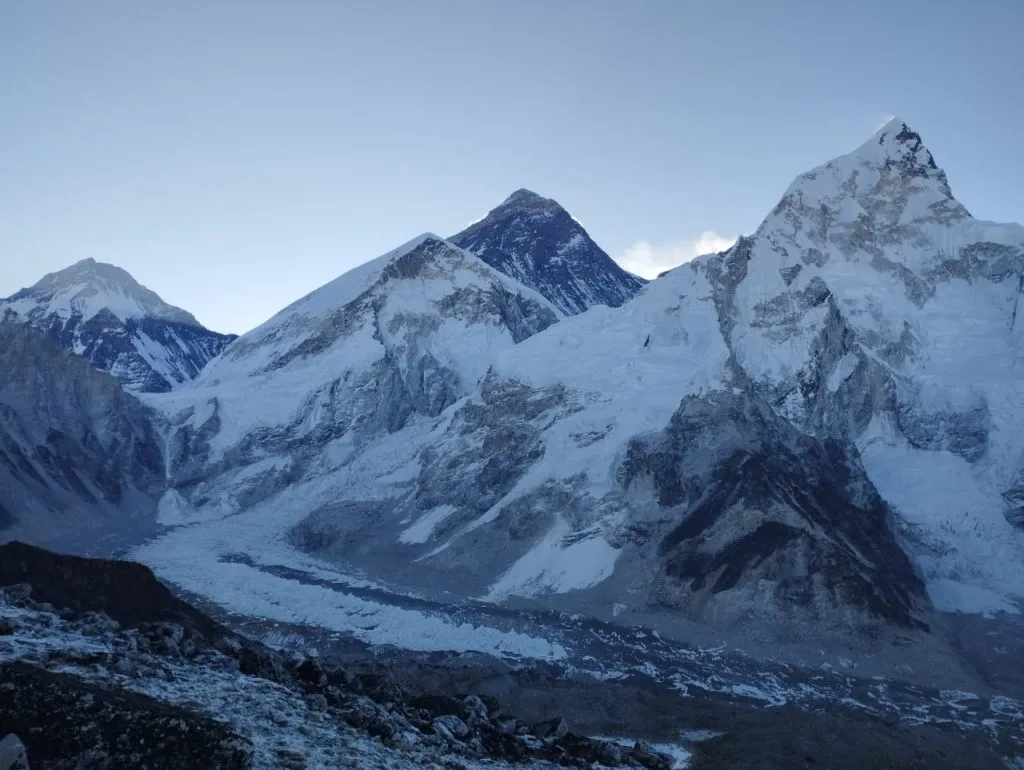
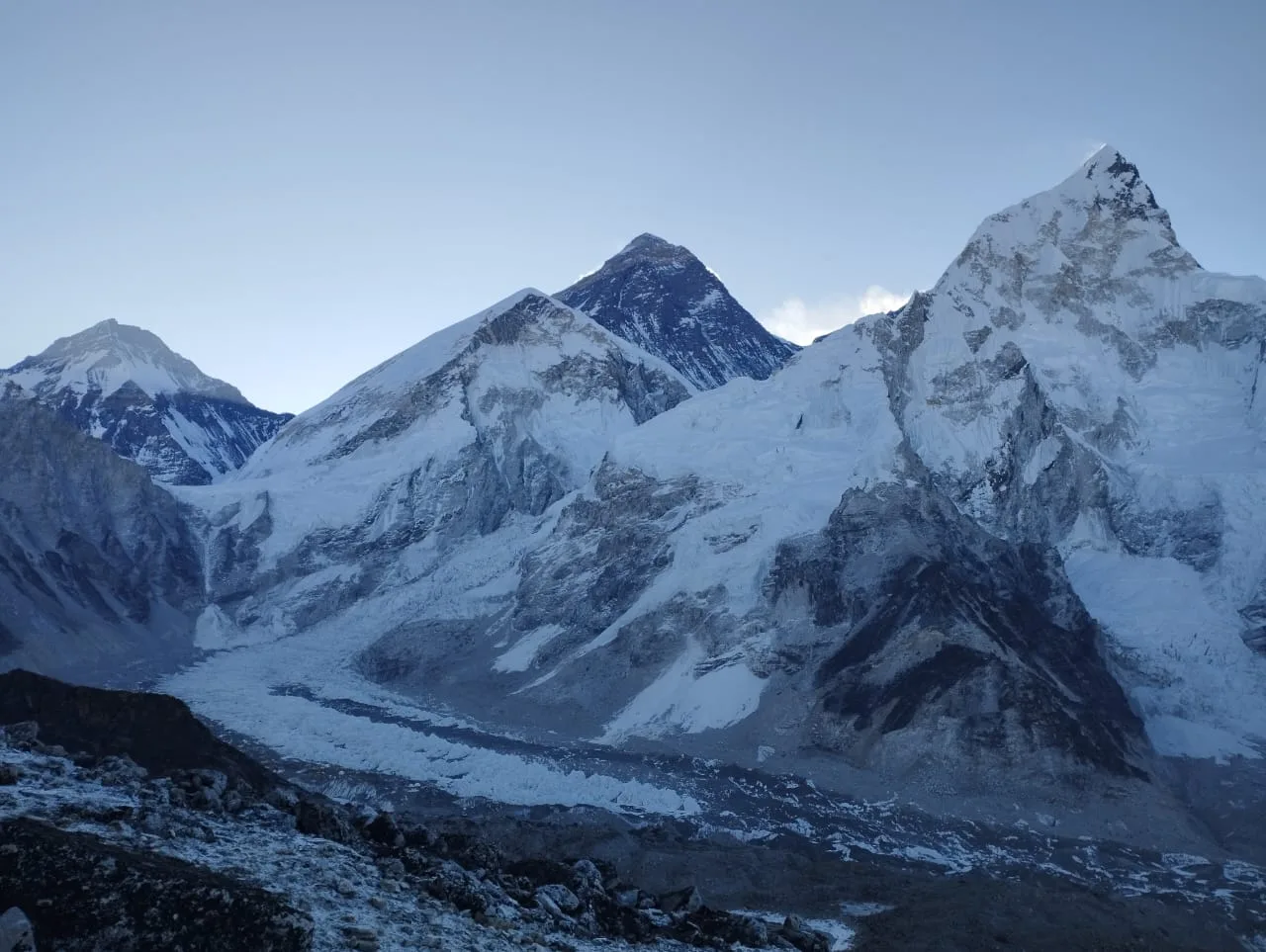
We make an early start for Kala Patthar. The climb above Gorak Shep is steep in places, and the altitude makes it demanding. In clear weather, the viewpoint offers close views of Everest, Nuptse, Pumori and the surrounding Khumbu peaks.
After the hike, return to Gorak Shep for breakfast and walk towards Lobuche. We then leave the main trail for Dzongla, following rocky slopes with views across the surrounding mountains in clear weather. Settle into your teahouse and prepare for tomorrow’s Cho La crossing.
Day 11: Cross Cho La Pass and Trek to Thangnak
PASS 1: Cho La Pass (5,420 m) Glacier Crossing — Thangnak, approximately 4,700 m — 7–9 hrs (9–10 km)
We leave Dzongla early and climb towards Cho La. Rocky paths lead to glacier terrain, where snow and ice can affect footing. Your guide assesses conditions before continuing higher.
The pass connects the Everest Base Camp side of the Khumbu with the Gokyo Valley. Follow your guide closely across the upper section, then begin the descent over steep, uneven ground towards the lower valley below.
The descent continues to Thangnak, where we settle into a teahouse. Keep a steady pace throughout this demanding stage and tell your guide if you feel unwell.
Day 12: Trek from Thangnak to Gokyo
Ngozumpa Glacier Crossing to Third Lake — Gokyo, approximately 4,790 m — 3–4 hrs (4–5 km)
Today’s shorter stage crosses the Ngozumpa Glacier towards Gokyo. The route passes over rocky debris and uneven moraine, with small climbs and descents along the way. Follow your guide’s chosen path across the changing terrain.
After leaving the glacier, continue towards Gokyo Village beside Dudh Pokhari, the third lake. We spend two nights here. Settle into your teahouse, rest and organise your warm layers for tomorrow’s viewpoint hike. Explore the nearby lakeside paths if your energy and conditions allow.
Day 13: Hike to Gokyo Ri and Return to Gokyo
Sunrise Climb to Gokyo Ri (5,357 m) Viewpoint — Gokyo, approximately 4,790 m — 3–5 hrs (4–6 km)
We start early for the climb to Gokyo Ri. The path rises above the village, with the altitude adding effort to the steep ascent. Walk steadily and keep warm layers accessible before the sun rises.
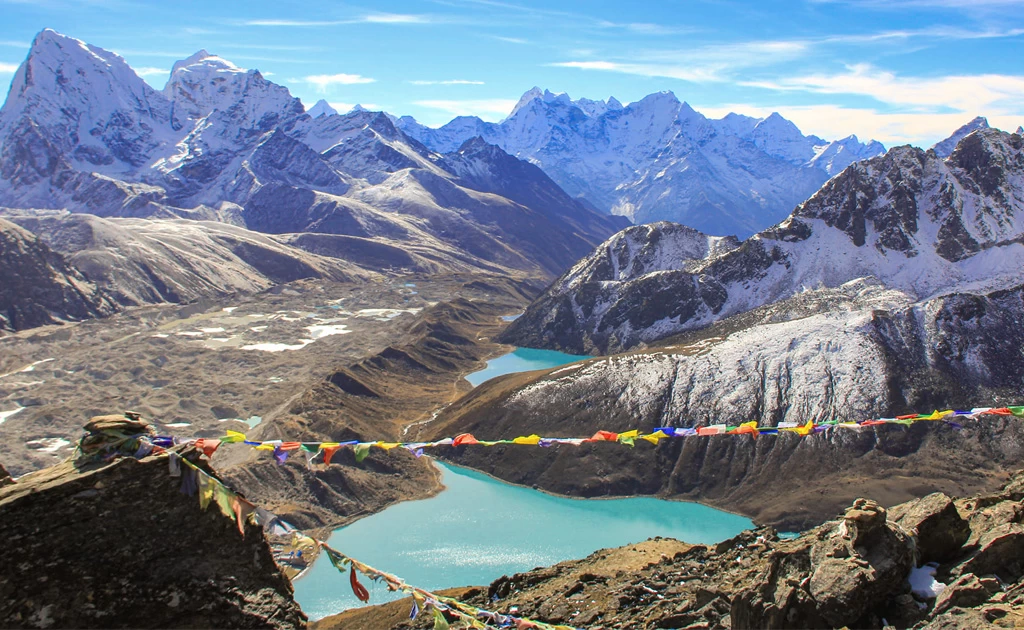
In clear weather, the viewpoint offers views of Everest, Lhotse, Makalu and Cho Oyu, with Gokyo Lakes and the Ngozumpa Glacier below. Return carefully to Gokyo and rest. Your guide reviews conditions and your progress before tomorrow’s Renjo La crossing.
Day 14: Cross Renjo La Pass and Trek to Lungden
PASS 2: Renjo La Pass (5,360 m) & Western Valley Descent — Lungden, approximately 4,380 m — 7–8 hrs (12–14 km)
We leave Gokyo early and climb towards Renjo La. The ascent is steep, with rocky ground and possible snow or ice. Your guide assesses conditions and your progress throughout.
From the pass, clear weather gives views across Gokyo Lakes towards Everest and the surrounding peaks. After a break, begin the long descent over stone steps and uneven paths into the western valley of the Khumbu.
Continue towards Lungden in the Bhote Koshi valley, where we stay in a teahouse. Both passes are behind you, although the remaining trek still includes uphill stretches.
Day 15: Trek from Lungden to Thame
Bhote Koshi Valley & Historic Sherpa Village — Thame, approximately 3,800 m — 4–5 hrs (9–10 km)
From Lungden, follow the Bhote Koshi valley towards Thame. The trail loses height through grazing country, passing stone-walled fields, village homes and Buddhist features. After yesterday’s long crossing, today allows a steadier walk through the lower part of the valley.
Thame is a Sherpa village known for its monastery and links with Himalayan mountaineering. Settle into your teahouse and rest. If time and conditions allow, ask your guide about exploring nearby paths or visiting the monastery, following local customs and any current access arrangements.
Day 16: Trek from Thame to Namche Bazaar
Circuit Completion to Sherpa Capital — Namche Bazaar, 3,440 m — 4–5 hrs (10–11 km)
Leaving Thame, follow the valley back towards Namche Bazaar. The route passes village homes and Buddhist features before returning to wooded slopes, with uphill stretches between the descending sections.
As we approach Namche, familiar shops, lodges and cafés come into view. Check into your teahouse after completing the circuit through Gokyo and the western valley. The rest of the day allows time to organise your belongings, visit nearby shops or rest before tomorrow’s final trekking stage back to Lukla.
Day 17: Trek from Namche Bazaar to Lukla
Dudh Koshi Valley Descent & Final Trek Day — Lukla, 2,860 m — 6–8 hrs (17–19 km)
Our final trekking day follows the route down from Namche through Jorsalle, Monjo and Phakding. You cross familiar suspension bridges and return through the forested sections of the Dudh Koshi valley.
The approach to Lukla includes uphill stretches, so there is still some effort ahead after the main descent. On arrival, we check into the teahouse for the last night in the mountains. The evening gives you time to organise your belongings and spend time with your guide and porter team.
Day 18: Fly from Lukla and Return to Kathmandu
Scenic Flight to Kathmandu & Farewell Dinner — Kathmandu, approximately 1,400 m — 3-Star Hotel
We prepare for the return flight from Lukla. Depending on the operating schedule, you may fly directly to Kathmandu or land at Manthali Airport and continue by road.
After reaching your hotel, the remaining time is free for rest, shopping or exploring nearby areas. We share a farewell dinner in Kathmandu, bringing the trekking programme to a close. Flight timing remains dependent on weather and airline operations.
Day 19: Departure from Kathmandu
Final Souvenir Shopping & International Airport Transfer — Home Sweet Home
Your 19-day Everest Two Passes Trek ends today. After breakfast, you prepare for your onward journey. Depending on your departure time, there may be an opportunity for a final walk nearby before leaving the hotel.
Our representative accompanies you to Tribhuvan International Airport for your departure.
What’s Included in the Everest Two Passes Trek
Airport Transfers
Airport transfers: Pickup and drop-off for your arrival and departure in Kathmandu.
Return Lukla Flights
Return Lukla flights: Flights from Kathmandu or Manthali, with necessary private ground transfers according to the operating flight schedule.
Hotel & Lodge Accommodation
Accommodation: Two nights in a 3-star Kathmandu hotel, plus sixteen twin-sharing teahouse nights. Private bathrooms and hot showers are included in Phakding, Namche Bazaar and Lukla.
Full Board Trekking Meals
Meals: Breakfast in Kathmandu; breakfast, lunch and dinner during trekking; farewell dinner in Kathmandu. Tea or coffee accompanies each trekking meal, with seasonal fruit and Snickers chocolate served with dinner.
Experienced Guide & Porters
Guide and porter: An experienced, English-speaking trekking guide and one porter for every two trekkers.
Permits & Regional Fees
Permits and entry fees: Sagarmatha National Park entry permit and the Khumbu Pasang Lhamu Rural Municipality entry fee.
Trekking Gear & Equipment
Trekking equipment: A sleeping bag, down jacket and duffel bag for use during your trek. Return these items after the trip.
First-Aid Supplies & Kit
First-aid supplies: A medical kit and first-aid equipment carried by the team.
Emergency Coordination
Emergency coordination: Helicopter rescue coordination if required. Evacuation costs are excluded.
Official Trek Extras & Taxes
Trip extras: A trekking map, printed completion certificate, government taxes and official service charges.
What’s Not Included in the Everest Two Passes Trek
International Flights & Visa
International flights and Nepal visa: Airfare to and from Nepal and your visa fee.
Travel & Medical Insurance
Travel insurance: The cost of your insurance policy, which must cover high-altitude trekking and emergency evacuation.
Emergency Evacuation Costs
Emergency evacuation: Helicopter rescue costs. We provide rescue coordination, but the evacuation itself is not included.
Personal Trekking Equipment
Personal equipment: Boots, clothing and other personal items beyond the sleeping bag, down jacket and duffel bag we provide.
Extra Food, Snacks & Drinks
Extra food and drinks: Snacks, bottled or boiled water and beverages beyond included meals, fruit, Snickers and tea or coffee.
Other Meals in Kathmandu
Other Kathmandu meals: Lunches and dinners apart from the farewell dinner included in Kathmandu.
Teahouse Extras & Wi-Fi
Teahouse extras: Wi-Fi, charging and showers beyond package allowances.
Tips & Gratuities
Tips and gratuities: Payments for guides, porters and drivers.
Delays & Program Extensions
Additional accommodation or transport: Extra costs may apply when delays, itinerary changes or personal extensions require services outside the programme.
Tiered Group Rates
Starting Prices
These are published starting rates. Contact us with dates and group size to confirm the quotation covering this 19-day itinerary, inclusions and your travel arrangements.
Standard Group Price
$1,599 / person
| Number of travellers | Published starting price per person | Package Status |
|---|---|---|
|
|
From USD 1,899 | Private Solo |
|
|
From USD 1,775 | Small Group |
|
|
From USD 1,599 | ★ Best Value |
|
|
Request a quote | Group Discount |
|
|
Request a quote | Custom Plan |
Everest Two Passes Trek Dates & Availability
Group Departures
If you would like to trek with other travellers, ask us about upcoming group departures. We’ll confirm the available dates, spaces and price for your chosen departure.
Private Trek Dates
Prefer to travel with your own group? Send us your preferred arrival date and number of travellers. We’ll check the arrangements for a private trek.
Upcoming Guaranteed Departures (2026–2027)
Small groups (max 10 trekkers) with flexible booking and free date shifts.
Currency:
USD ($)
15 Mar 2026 – 02 Apr 2026
● Guaranteed Departure • 4 spots left
From
$1,599
05 Apr 2026 – 23 Apr 2026
● Guaranteed Departure • 6 spots left
From
$1,599
04 Oct 2026 – 22 Oct 2026
● Peak Autumn Sky • 5 spots left
From
$1,599
Hiking Gear
Footwear, trekking poles, daypack and trail protection
Clothing
Breathable thermal base layers, moisture-wicking shirts and waterproof outer shell
Note: We provide an insulated down jacket, which must be returned after the trek.
Sleeping Equipment
Sub-zero cold insulation and overnight lodge comfort
Toiletries & Hygiene
Sun protection, personal sanitation and essential blister medical care
Electronics
Trail navigation, cold-weather power backup and lighting
Documents & Personal Items
Mandatory permits, currency and identification documents
Note: We provide a loan duffel bag. Your guide checks essential equipment, including any traction needed for current pass conditions. Keep passports, money and electronics in your daypack.
Sherpa Porter Luggage Allowance & Daypack Advice
We provide an 80L waterproof duffel bag for your main luggage carried by our local porters (maximum luggage allowance: 10–12 kg per trekker, returned after your trek). Please carry your daypack (5–7 kg) containing your daily drinking water, fleece mid-layer, waterproof jacket, camera, prescription medication, passport, and valuables.
Read Before You Book
Before booking your Everest Two Passes Trek, consider the daily walking, altitude and pass conditions. These details will help you prepare and decide whether the itinerary suits your experience, fitness and expectations.
If you have questions about preparation, fitness or route conditions, feel free to email or WhatsApp our local team directly.
1. Trek Difficulty and Fitness
Very challenging high-pass circuit requiring steep climbs, glacier travel, and cardiovascular endurance.
The Everest Two Passes Trek involves steep paths, glacier terrain and repeated days at high altitude. Cho La and Renjo La require sustained climbs and long descents. Snow and ice can increase the difficulty. Prepare for consecutive walking days and discuss your previous mountain trekking experience.
Previous high-altitude trekking experience is strongly recommended. Build endurance through longer hill walks with a daypack, and become comfortable on steep, uneven paths.
Begin preparing around two to three months beforehand, allowing longer if you are starting from a low fitness level. Gradually combine regular walks, hill hikes and strength exercises. Practise in the boots you will wear on the trek.
2. Altitude and Acclimatisation
Acclimatisation rest days in Namche & Dingboche with daily health monitoring.
Our itinerary includes acclimatisation days in Namche and Dingboche before the higher stages. Additional nights help, but altitude illness remains possible. Your guide reviews conditions and how you feel.
Tell your guide immediately about headaches, nausea, dizziness or unusual fatigue. Do not continue to a higher sleeping altitude while experiencing symptoms of altitude illness. If symptoms worsen despite resting at the same elevation, descent is necessary. Completing either pass must remain secondary to your health.
3. Medical Conditions and Travel Insurance
Mandatory emergency helicopter evacuation & high-altitude medical policy up to 5,545 m.
If you have an existing medical condition, seek advice from a healthcare professional familiar with high-altitude travel before booking. Discuss your planned route and any medicines you take.
Travel insurance is compulsory for this package. Confirm cover for the route, including Kala Patthar at approximately 5,545 metres, both passes, emergency helicopter evacuation and medical treatment. Check altitude restrictions, exclusions, excess charges and emergency procedures. Carry your policy details and emergency contacts.
4. Accommodation and Room Facilities
3-star hotel in Kathmandu & twin-share teahouses with private facilities at key stops.
You stay in a three-star Kathmandu hotel and twin-sharing teahouses along the route. We include two hotel nights and sixteen teahouse nights, with Gorak Shep the highest overnight stop en route.
Higher lodges have simpler rooms with shared bathrooms. Private bathrooms and hot showers are included in Phakding, Namche and Lukla. Confirm room arrangements and upgrades before departure. Prepare for cold nights around Gorak Shep, Dzongla and Gokyo.
5. Food and Dietary Requirements
Three nutritious meals daily on trek, hot drinks, seasonal fruit and dinner Snickers.
Trekking meals include breakfast, lunch and dinner, with tea or coffee at each meal, plus seasonal fruit and Snickers chocolate with dinner.
Tell us about allergies or dietary requirements before booking so we can discuss what can be arranged along the route. Explain any strict requirements clearly, including concerns about shared cooking equipment.
6. Drinking Water
Boiled and treated water precautions for safe hydration along trail.
Carry reusable bottles and drink boiled or appropriately treated water. Water from a clear stream or an untreated tap may still contain germs.
Boiling is the most reliable way to kill germs. If boiling is unavailable, filtration followed by disinfection offers broader protection than many portable filters alone. Follow the instructions for your treatment equipment or tablets.
7. Guide and Porter Support
Experienced licensed English-speaking guides and 1 porter between two trekkers.
An experienced, English-speaking guide and one porter per two trekkers support your route. Porter meals, accommodation, insurance and wages are included. You carry your daypack; confirm porter loads and luggage allowances before departure.
8. Showers, Charging and Communication
Included hot showers at Phakding, Namche & Lukla; higher alpine connectivity advice.
Private bathrooms and hot showers are included at Phakding, Namche and Lukla. Other showers, Wi-Fi, charging, laundry and phone calls cost extra. Facilities vary, and mobile reception can be unreliable. Carry a power bank and tell family you may be out of contact during the trek.
9. Permits and Documents
Sagarmatha National Park entry & Khumbu Pasang Lhamu Rural Municipality fees included.
We arrange the Sagarmatha National Park permit and Khumbu Pasang Lhamu Rural Municipality entry permit as part of the package. Carry your passport, insurance details and copies of important documents. Your Nepal visa remains your responsibility.
10. Flight Delays and Extra Time
Mountain weather contingency planning for Lukla and Manthali Airport flights.
Lukla flights can be delayed or cancelled because of weather. During peak periods, flights may use Manthali Airport in Ramechhap, requiring a road transfer.
Your return flight is on Day 18, before departure on Day 19. Discuss extra time and potential costs if weather disrupts your travel plans.
Altitude Profile of the Everest Two Passes Trek
Your overnight stops rise through Namche, Tengboche and Dingboche to Gorak Shep, the highest place you sleep. After Kala Patthar, continue through Dzongla, Thangnak and Gokyo before descending through Lungden and Thame. The pass crossings and viewpoint hikes are daytime objectives, separate from sleeping elevations.
Peak Objective
5,545 m
Kala Patthar Viewpoint (Day 10)
Highest Lodge
5,164 m
Gorak Shep Teahouses (Day 9)
Dual High Passes
5,420 m & 5,360 m
Cho La (D11) & Renjo La (D14)
Safety Schedule
3 Rest Stops
2 Nights at Namche, Dingboche & Gokyo
Interactive Day-by-Day Elevation Profile
Interactive elevation chart showing daily gain, pass ascents and sleeping elevations. Switch units below to convert between meters (m) and feet (ft).
| Day | Overnight Stop | Approximate Altitude | Route Notes / Terrain |
|---|---|---|---|
| Day 1 | Kathmandu | 1,400 m | Arrival day; no trekking |
| Day 2 | Phakding | 2,610 m | Flight to Lukla (2,860 m) & descend Dudh Koshi valley |
| Day 3–4 | Namche Bazaar | 3,440 m | Forest trail, suspension bridges; acclimatisation hike to Everest View (3,880 m) |
| Day 5 | Tengboche | 3,860 m | Descent to Phunki Tenga & forest climb to monastery ridge |
| Day 6–7 | Dingboche | 4,410 m | Wide Imja Valley trail; acclimatisation hike towards Nangkartshang |
| Day 8 | Lobuche | 4,910 m | Thukla Pass memorial ridge & glacial moraine ascent |
| Day 9 | Gorak Shep | 5,164 m | Rocky Khumbu Glacier trail & Everest Base Camp visit (5,364 m) |
| Day 10 | Dzongla | 4,830 m | Early Kala Patthar viewpoint (5,545 m) & rocky traverse to pass base |
| Day 11 | Thangnak | 4,700 m | Cross Cho La Pass (5,420 m) across glacier & steep descent |
| Day 12–13 | Gokyo | 4,790 m | Ngozumpa Glacier moraine crossing; sunrise Gokyo Ri hike (5,357 m) |
| Day 14 | Lungden | 4,380 m | Cross Renjo La Pass (5,360 m) & descend into western Bhote Koshi valley |
| Day 15 | Thame | 3,800 m | Valley descent past stone-walled pastures & historic monastery |
| Day 16 | Namche Bazaar | 3,440 m | Return valley walk through pine forest completing circuit |
| Day 17 | Lukla | 2,860 m | Descent down Dudh Koshi through Monjo & final climb to Lukla |
| Day 18 | Kathmandu | 1,400 m | Flight from Lukla (or Manthali road transfer) & farewell dinner |
| Day 19 | Departure | No overnight stay | Airport transfer for international departure flight |
Elevations are approximate and follow the overnight stops in our itinerary.
Higher Places You Visit
Key high-altitude waypoints, viewpoint summits, and glacier pass crossings tackled during daylight hours.
KEY WAYPOINT • SUNRISE SUMMIT
5,364 m and 5,545 m
Days 9–10 — Everest Base Camp and Kala Patthar
Glacial amphitheatre beneath the Khumbu Icefall and the iconic close-range sunrise panorama of Mount Everest, Nuptse, and Pumori.
Khumbu Icefall & 360° Everest Panorama
KEY WAYPOINT • GLACIAL HIGH PASS
Approximately 5,420 m
Day 11 — Cho La Pass
Demanding high pass crossing linking the central Khumbu Glacier network with the sacred Gokyo Valley, crossed before descending to Thangnak.
Glacier Traverse • Khumbu-to-Gokyo Link
KEY WAYPOINT • PANORAMIC SUMMIT
Approximately 5,357 m
Day 13 — Gokyo Ri
Stunning 360-degree vantage point offering unobstructed views of four 8,000-metre giants: Everest, Lhotse, Makalu, and Cho Oyu above turquoise lakes.
Four 8,000m Giants (Everest, Lhotse, Makalu, Cho Oyu)
KEY WAYPOINT • WILDERNESS PASS
Approximately 5,360 m
Day 14 — Renjo La
Breathtaking pass overlook spanning Gokyo Lakes and Everest, followed by the long wilderness descent towards remote Lungden village.
Gokyo Lake Overlook • Bhote Koshi Valley
Namche, Dingboche and Gokyo each have two overnight stays. Acclimatisation and viewpoint hikes return to the same village, while both passes involve descents to teahouses.
Weather and Best Time for the Everest Two Passes Trek
Spring, from March to May, and autumn, from September to November, are the main planning seasons for the Everest Two Passes Trek. Both offer opportunities for mountain views, although cold weather, cloud and snowfall remain possible around the higher villages and on both passes.
These are seasonal patterns; conditions can vary from year to year and during an individual trek.
How Weather Changes Along the Route
Lower Valleys & Settlements
Walking around Phakding and Namche can feel warm in sunshine. Conditions become colder around Dingboche, Lobuche, Gorak Shep and Gokyo, particularly before sunrise, after sunset and on the exposed passes.
High Passes & Ridge Viewpoints
During spring and autumn, nights on the higher route can fall below freezing. Wind makes the viewpoints and passes feel colder, while snow or ice affects footing. Carry warm layers, gloves and weather protection, and follow your guide’s advice.
Which Season Should You Choose?
Spring: Rhododendrons & Warming Days
Choose spring if you prefer gradually warming days and flowering forests on the lower trail.
Autumn: Crystal Mountain Visibility
Choose autumn, particularly October or November, if mountain visibility is your main priority.
Winter & Monsoon Flexibility
Winter and monsoon require greater flexibility and preparation for less comfortable conditions.
SECURE YOUR DATES
Book the Everest Two Passes Trek
Send us your preferred travel dates, number of travellers and questions about the Everest Two Passes Trek. We’ll check availability and confirm a quotation for this 19-day itinerary. Tell us about your mountain trekking experience, fitness and schedule so we can discuss the pass crossings, daily arrangements and preparation before travelling to Nepal.
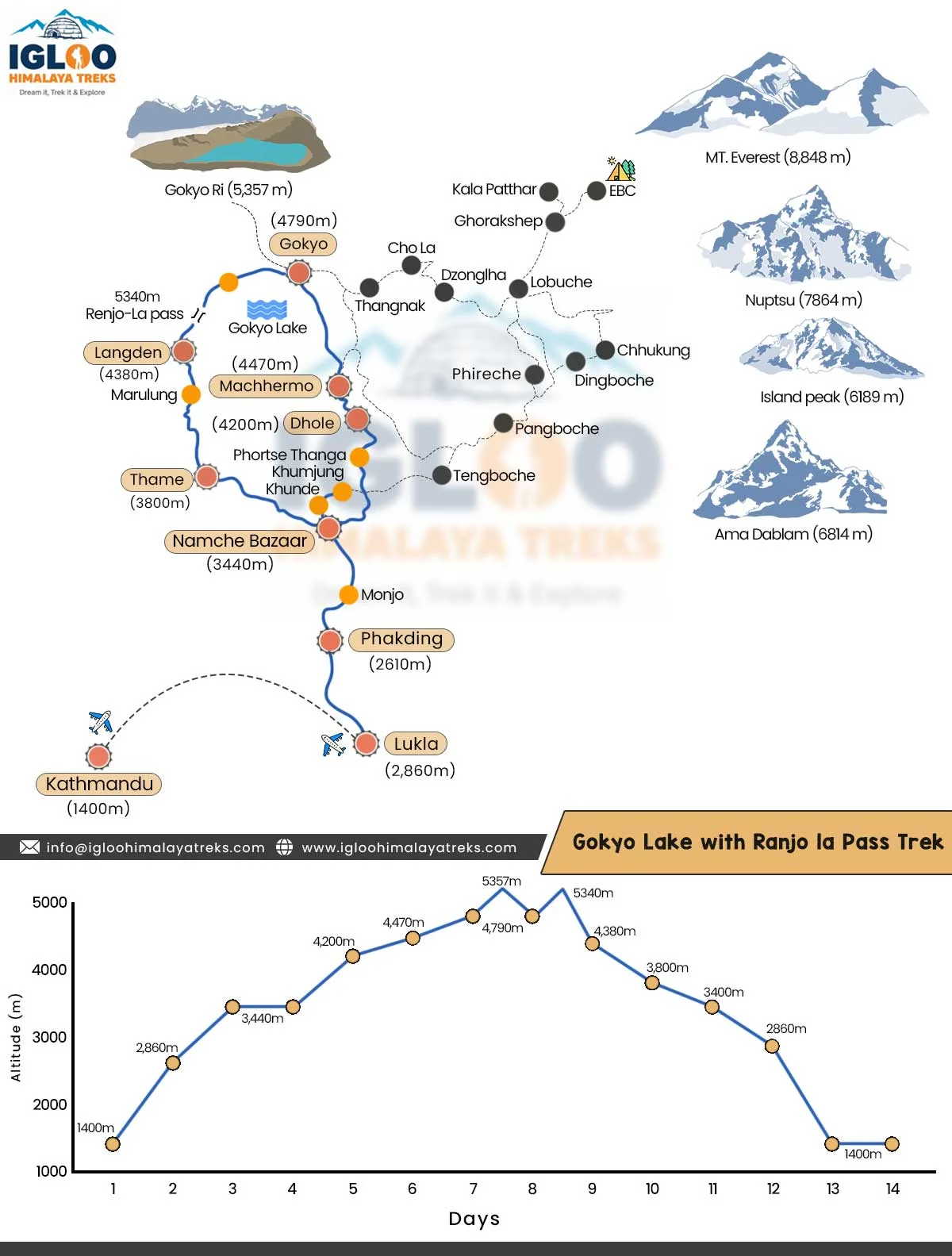
Everest Cho La and Renjo La Pass Trek Route Map
Visual GPS trail route connecting Lukla, Namche Bazaar, Everest Base Camp, Kala Patthar, Cho La Pass, Gokyo Lakes, Renjo La Pass, and Thame Valley.
AUTHENTIC TRAVELER STORIES
Everest Cho La and Renjo La Pass Trek (19 Days) Reviews
Read genuine feedback from trekkers who conquered Cho La Pass (5,420 m), Renjo La Pass (5,360 m), stood at Everest Base Camp (5,364 m), and gazed over turquoise Gokyo Lakes with Igloo Himalaya Treks.
25 October
16 October
29 September
12 October
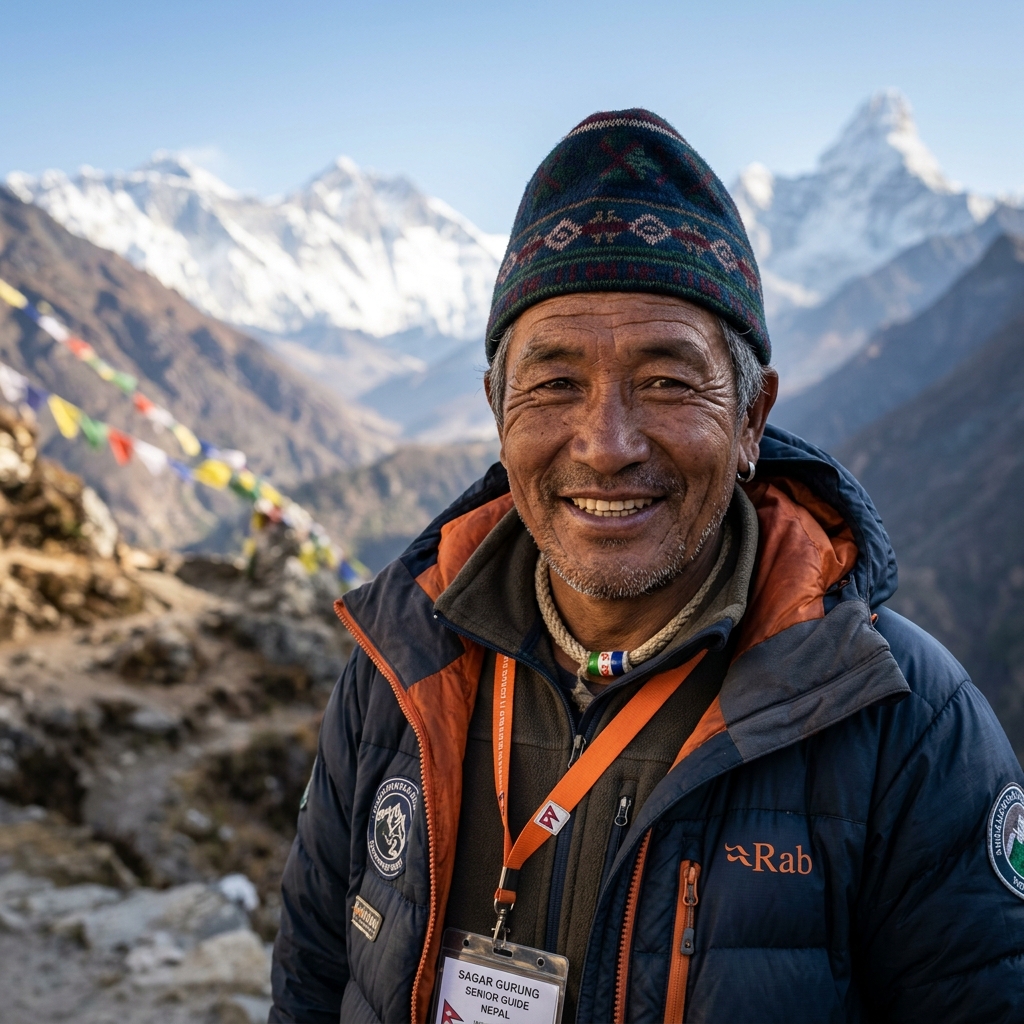 Guided by Sagar Gurung
FREQUENTLY ASKED QUESTIONS
Everest Two Passes Trek FAQs
Essential answers about high passes, required fitness, teahouse facilities, and trek logistics for the 19-day journey.
General & Route
Can I do this trek without previous trekking experience?
Previous mountain trekking experience is strongly recommended. This route includes glacier terrain, long walking days and two high passes. Prepare through hill walks with a daypack, and discuss your experience, fitness and ability on uneven ground with us.
What is the highest altitude on this itinerary?
The highest planned point is Kala Patthar at approximately 5,545 metres, above Everest Base Camp at 5,364 metres. Your highest overnight stop is Gorak Shep at approximately 5,164 metres, where you stay after visiting Base Camp.
Can I see Mount Everest from Base Camp?
Everest’s summit is generally hidden behind nearby ridges from Base Camp itself. Kala Patthar provides the clearer view of Everest that many travellers expect. Our itinerary includes this viewpoint, although mountain visibility depends on the weather.
Do we sleep at Everest Base Camp?
No. You visit Base Camp during the day and return to a teahouse in Gorak Shep for the night. The following morning includes the planned Kala Patthar hike before continuing towards Dzongla. Camping at Base Camp is not included.
Does this itinerary cross all three Everest high passes?
No. This route crosses Cho La and Renjo La, with Everest Base Camp and Gokyo included. Kongma La belongs to the Everest Three High Passes Trek, which adds stages through Chhukung before joining the trail towards Lobuche and Base Camp.
Do I need to carry my main trekking bag?
A porter carries your main trekking luggage, with one porter shared between two trekkers. You carry your daypack containing water, weather protection, medicines and other daily essentials. Keep your passport, money and valuables with you.
Do I need to bring a sleeping bag and down jacket?
We provide a sleeping bag, down jacket and duffel bag for use during the trek. Return the loan equipment afterwards. You prepare personal items such as trekking boots, clothing, toiletries, electronics and anything needed for your health.
Are acclimatisation days complete rest days?
They usually include a shorter hike above Namche Bazaar or Dingboche, followed by a return to the same village to sleep. Your guide adjusts the hike according to conditions and how the group is feeling.
Does being fit protect me from altitude sickness?
No. Good fitness helps with the walking demands, but it does not prevent altitude illness. Fit and experienced trekkers can also become unwell. Follow the acclimatisation schedule and report symptoms immediately instead of assuming fitness will protect you.
What should I do if I feel unwell at altitude?
Tell your guide immediately about headaches, nausea, dizziness or unusual fatigue. Do not ascend to a higher sleeping altitude while experiencing symptoms of altitude illness. If symptoms worsen despite rest at the same elevation, descent is necessary.
Can I book as a solo traveller?
Yes. Published solo rates are available. Send us your preferred dates so we can check group or private arrangements and confirm a quotation for the full 19-day itinerary, accommodation and porter support that you need.
Is insurance covering trekking to 5,500 metres sufficient?
A limit of 5,500 metres falls below the planned Kala Patthar elevation of approximately 5,545 metres. Ask your insurer to confirm coverage for the full route, emergency helicopter evacuation and medical treatment, including any relevant exclusions or conditions.
MORE ADVENTURES
You Might Also Like
If you would prefer fewer pass crossings, a lake-focused route or the complete Three Passes circuit, consider these Everest-region packages.
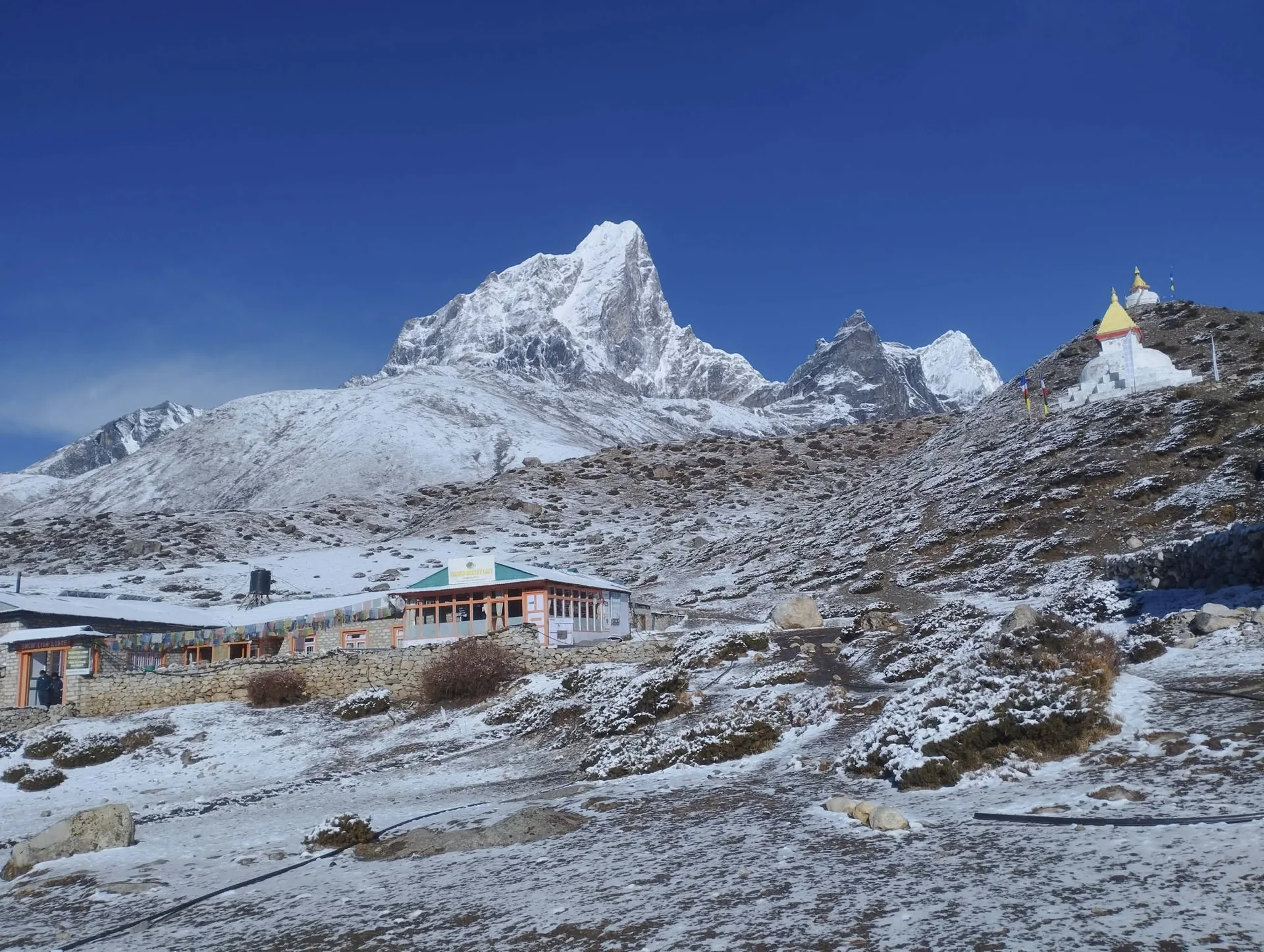 14 Days
Everest Base Camp Trek
Follow the classic Everest Base Camp trail through Namche Bazaar, Tengboche and Dingboche, with acclimatisation days and a Kala Patthar hike. This route returns through the main valley without crossing Cho La or Renjo La.
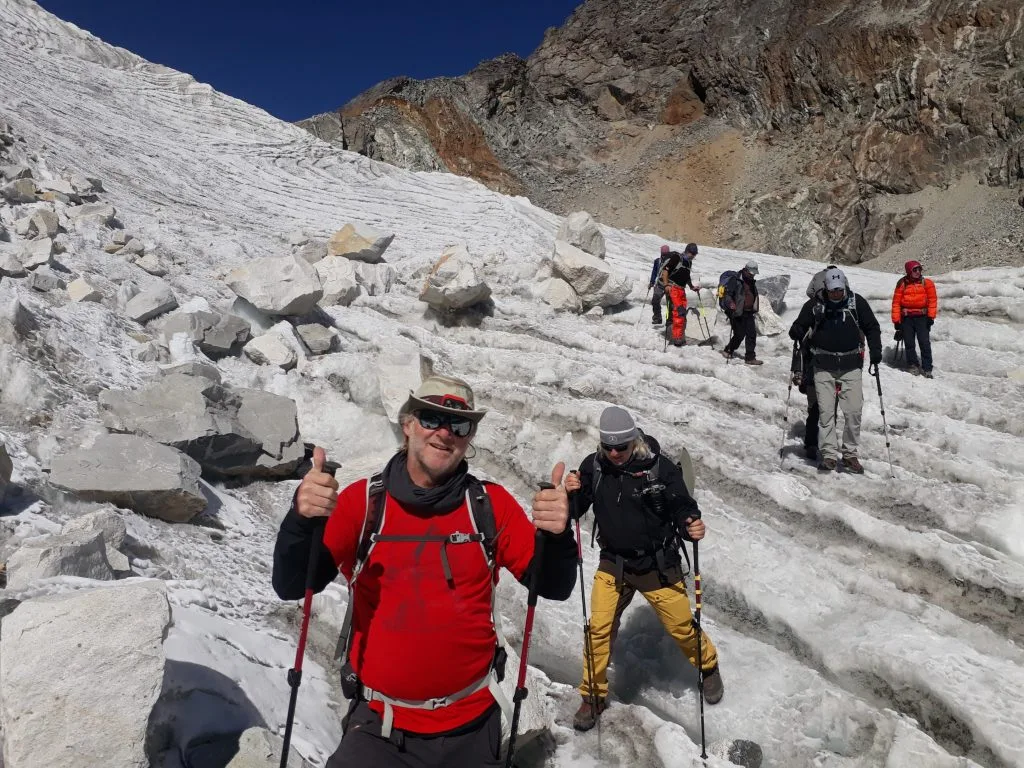 17 Days
EBC Chola Pass Gokyo Trek
Combine Everest Base Camp, Kala Patthar and Gokyo Lakes with the Cho La crossing. After Gokyo Ri, return through Dole and Namche rather than continuing over Renjo La into the western valley.
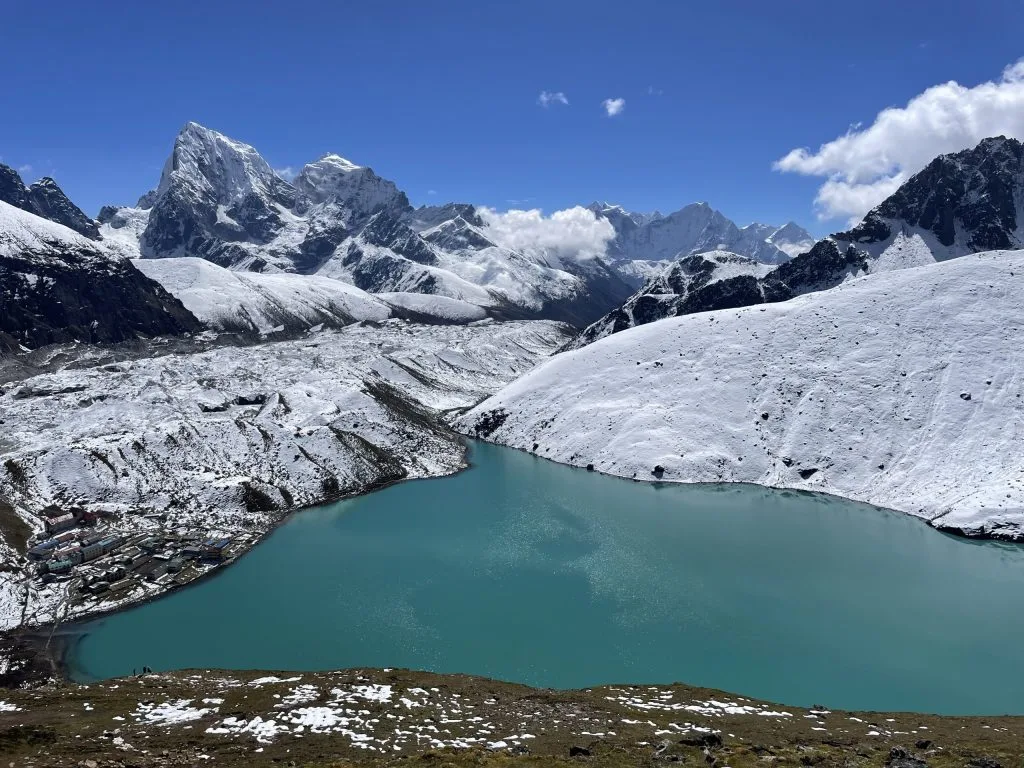 14 Days
Gokyo Lake Renjo La Pass Trek
Follow the Gokyo Valley through Dole and Machhermo to the lakes, hike Gokyo Ri and cross Renjo La before returning through Lungden and Thame. This route focuses on the lakes and western valley without visiting Everest Base Camp.
21 Days
Everest Three High Passes Trek
Add Kongma La to Cho La and Renjo La on a longer Khumbu circuit. The route visits Chhukung, Everest Base Camp and Gokyo Lakes, with several viewpoint hikes and a return through Lungden and Thame to Namche.