1. The Premier Seasons for Annapurna Base Camp: Autumn & Spring Overview
The Annapurna Sanctuary possesses a unique amphitheater microclimate. Flanked by massive vertical walls of rock and ice that rise over 7,000 and 8,000 meters, the basin traps warmth during sunny days but radiates heat rapidly after dusk.
Nepal’s climate follows four distinct seasonal cycles, each offering a fundamentally different experience in the Modi Khola canyon:
| Season | Calendar Months | Day / Night Temp at ABC (4,130 m) | Trail Highlights | Overall Rating |
|---|---|---|---|---|
| Autumn (Peak) | Late Sept – Nov | 10°C to 16°C / -5°C to -10°C | Flawless blue skies, dry trails, sharpest peak clarity | (Best Overall) |
| Spring (Prime) | March – May | 12°C to 18°C / -2°C to -8°C | Blooming rhododendrons, warmer days, green valleys | (Flora & Wildlife) |
| Winter (Cold / Solitude) | Dec – Feb | 2°C to 8°C / -12°C to -20°C | Deep snow, crystal air, empty lodges, avalanche risks | (Rugged & Quiet) |
| Monsoon (Wet / Low) | June – Early Sept | 16°C to 22°C / 4°C to 8°C | Heavy downpours, leeches, cloud cover, lush greenery | (High Rain / Leeches) |
2. Autumn Glory (October & November): Crystal Azure Skies & Golden Alpenglow
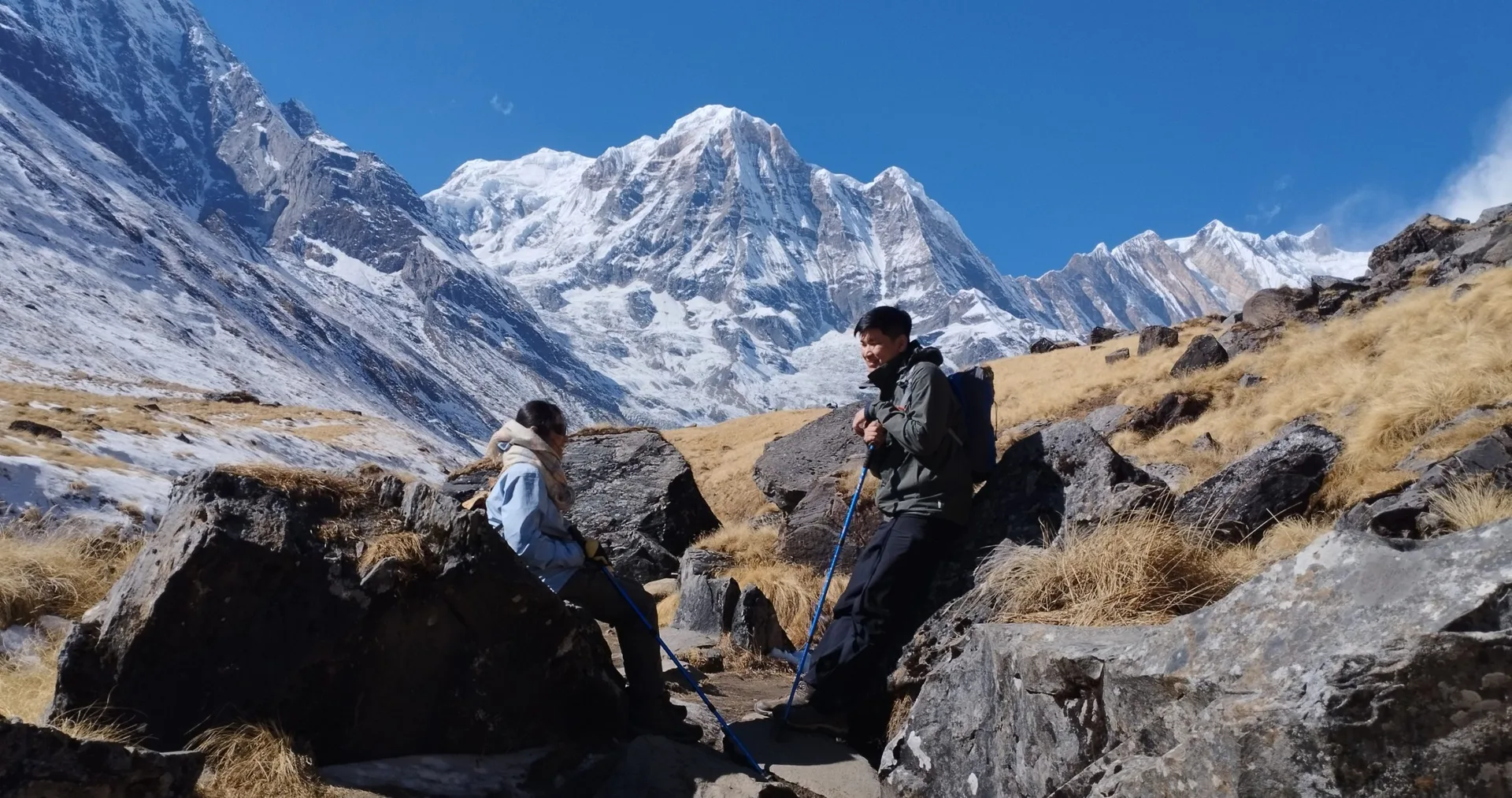
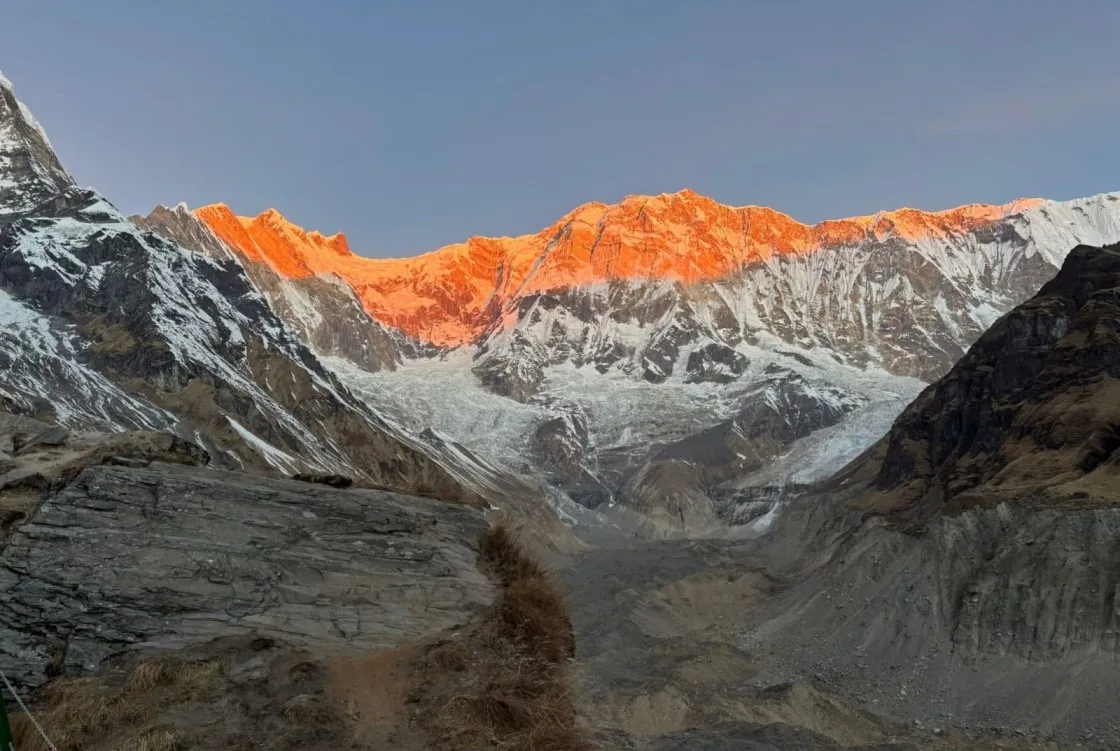
October and November are universally recognized as the finest months of the year for trekking to Annapurna Base Camp. By early October, the summer monsoon has fully dissipated, sweeping away all atmospheric dust and leaving the Himalayan air optical-lens clean.
Why Autumn is Unrivaled:
- Superb Visibility: From 6:00 AM to late afternoon, Annapurna I, Annapurna South, Hiunchuli, and Machapuchare remain completely cloud-free.
- Stable Avalanche Conditions: The snowpack in the Deurali–MBC canyon is dry and stable following the warm summer, minimizing snowslide risks.
- Comfortable Walking Temperatures: Daytime temperatures in the lower valleys (Chhomrong, Sinuwa) hover around a pleasant 18°C to 22°C, while high camps reach 10°C in the sun.
- Festive Atmosphere: Nepal’s two largest religious festivals—Dashain and Tihar—occur during autumn, filling mountain villages with joy, swings, and flower garlands.
3. Spring Renaissance (March to May): Rhododendron Canopy & Mild High-Altitude Sunshine
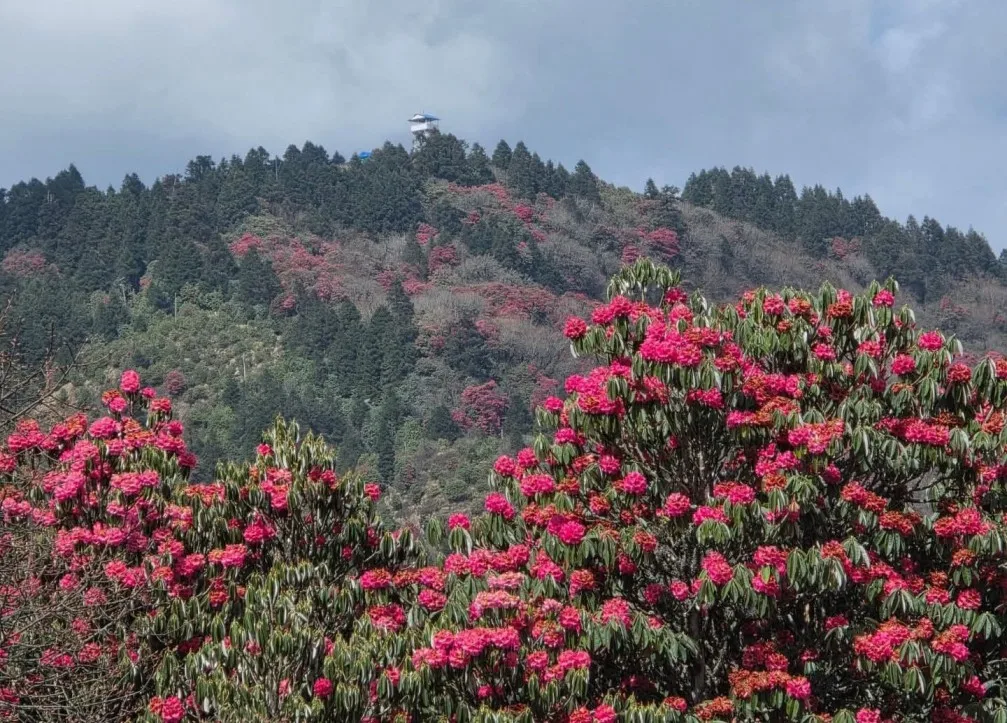
Spring is the season of color and vitality. As winter frost thaws, the lower river valleys and cloud forests between 2,000 and 3,200 meters burst into breathtaking displays of wild flora.
Spring Progression:
- March: The upper sanctuary emerges from winter snow. Forest trails around Ghorepani, Tadapani, and Chhomrong reveal early rhododendron blossoms. Nights at ABC remain brisk (-8°C), but daytime sunshine is warming.
- April: The absolute peak flowering window. Entire mountainsides are carpeted in crimson, scarlet, magenta, and white rhododendrons. Temperatures are mild, and wildlife like Himalayan tahr and musk deer roam the canyon.
- May: The warmest month before the monsoon. Daytime temperatures at ABC can reach a comfortable 14°C to 18°C. However, afternoon pre-monsoon convective clouds gather earlier, making 6:00 AM starts essential for peak views.
4. Month-by-Month Temperature, Precipitation & Daylight Hours Matrix (Pokhara vs ABC)
Below is empirical meteorological data comparing temperatures, precipitation, and sunshine hours between Lakeside Pokhara (820 m) and Annapurna Base Camp (4,130 m):
| Month | Pokhara Avg Temp | ABC Max Temp | ABC Min (Night) Temp | Rainfall (mm) | Sunny Days / Month |
|---|---|---|---|---|---|
| January | 19°C / 7°C | 2°C (36°F) | -15°C (5°F) | 22 mm (Snow) | 25 days |
| February | 22°C / 9°C | 4°C (39°F) | -12°C (10°F) | 28 mm (Snow) | 23 days |
| March | 26°C / 13°C | 8°C (46°F) | -8°C (18°F) | 45 mm (Mixed) | 24 days |
| April | 30°C / 17°C | 12°C (54°F) | -4°C (25°F) | 75 mm (Rain/Hail) | 22 days |
| May | 31°C / 20°C | 15°C (59°F) | 0°C (32°F) | 160 mm (Rain) | 18 days |
| June | 31°C / 22°C | 17°C (63°F) | 4°C (39°F) | 380 mm (Heavy) | 9 days |
| July | 30°C / 23°C | 18°C (64°F) | 6°C (43°F) | 650 mm (Monsoon) | 5 days |
| August | 30°C / 23°C | 17°C (63°F) | 5°C (41°F) | 580 mm (Monsoon) | 6 days |
| September | 29°C / 21°C | 15°C (59°F) | 2°C (36°F) | 240 mm (Clearing) | 16 days |
| October | 27°C / 15°C | 11°C (52°F) | -5°C (23°F) | 40 mm (Dry) | 27 days |
| November | 24°C / 11°C | 7°C (45°F) | -10°C (14°F) | 12 mm (Dry) | 28 days |
| December | 20°C / 8°C | 4°C (39°F) | -14°C (7°F) | 15 mm (Snow) | 26 days |
5. Winter Sanctuary Expedition (December to February): Frozen Waterfalls & Extreme Solitude
Winter trekking to Annapurna Base Camp is an incredible, raw Himalayan adventure suited for prepared trekkers seeking complete trail solitude.
The Winter Reality:
- Crystal Clear Skies: Winter days consistently offer stunning azure skies with zero haze and crisp light for photography.
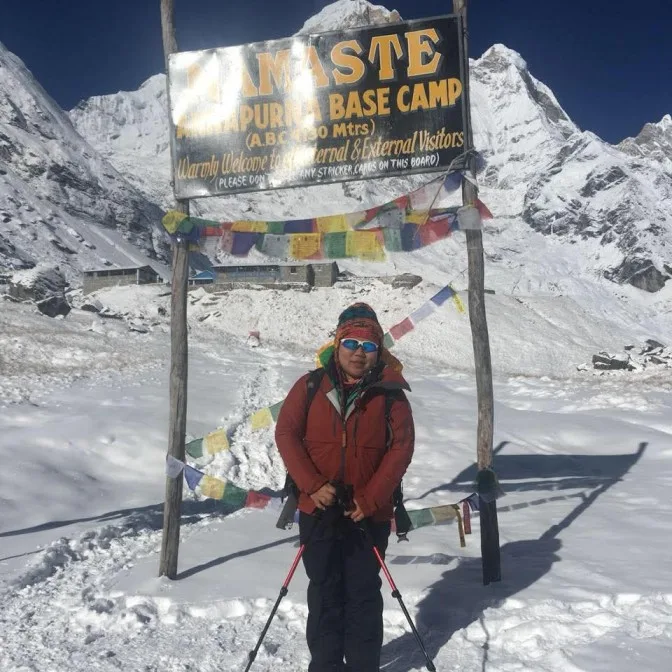
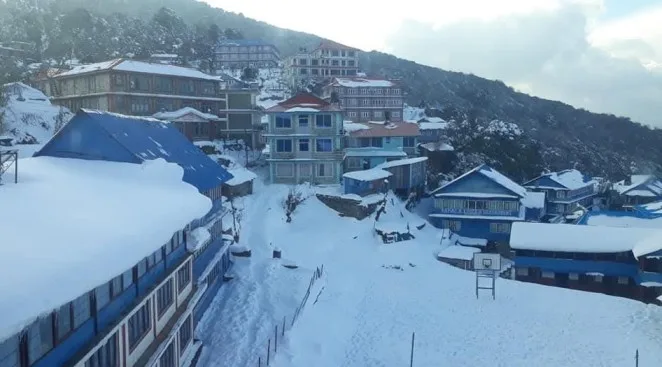
- Sub-Zero Nights: Nighttime temperatures at Deurali, MBC, and ABC drop to between -12°C and -20°C. Water pipes freeze solid, meaning indoor toilets cease operating.
- Snow Accumulation: Heavy snowfall can cover stone staircases in bulletproof ice, requiring microspikes or crampons for safe footing.
- Avalanche Risk: High snowpacks on Hiunchuli can trigger avalanches across the trail between Deurali and MBC. Licensed guides monitor conditions daily.
6. Monsoon Summer Season (June to August): Heavy Rainfall, Leeches & Landslide Risks
We generally advise against trekking to Annapurna Base Camp between June and August. The South Asian summer monsoon channels moisture directly from the Bay of Bengal into the Pokhara basin, which receives the highest rainfall in all of Nepal (over 4,000 mm annually).
Monsoon Hazards:
- Active Terrestrial Leeches: Forest sections between Jhinu, Chhomrong, and Dovan teem with bloodsucking leeches on vegetation and wet stone paths.
- Landslides & Road Closures: Torrential rains trigger mudslides along the road between Pokhara and Siwai, frequently stranding vehicles.
- Total Cloud Obscurity: Mountain summits remain shrouded behind dense monsoon cloud banks for weeks at a time.
7. The Modi Khola Microclimate: Morning Clears vs Afternoon Valley Cloud Buildup
Understanding the daily weather cycle of the Modi Khola river valley is the secret to enjoying sunny hiking days and capturing magnificent photography:
- Dawn (5:30 AM – 9:00 AM): The air is calm, cold, and crystalline. Valley winds are at rest, delivering the sharpest mountain reflections and alpenglow.
- Midday (11:00 AM – 2:00 PM): Solar heating of the subtropical lowlands warms the valley air. Warm moisture rises up the river gorge through chimney-effect convection.
- Afternoon (2:30 PM – 5:30 PM): Dense fog and cumulus clouds routinely roll up the canyon into Bamboo, Deurali, and ABC, occasionally dropping light afternoon showers or snow flurries.
Always begin hiking by 7:00 AM or 7:30 AM every morning. This ensures you complete 80% of your daily walking distance under bright morning sunshine, arriving at your afternoon teahouse before convective clouds and mist roll up the gorge.
8. Seasonal Avalanche Dynamics: Safe Crossings Between Deurali and MBC
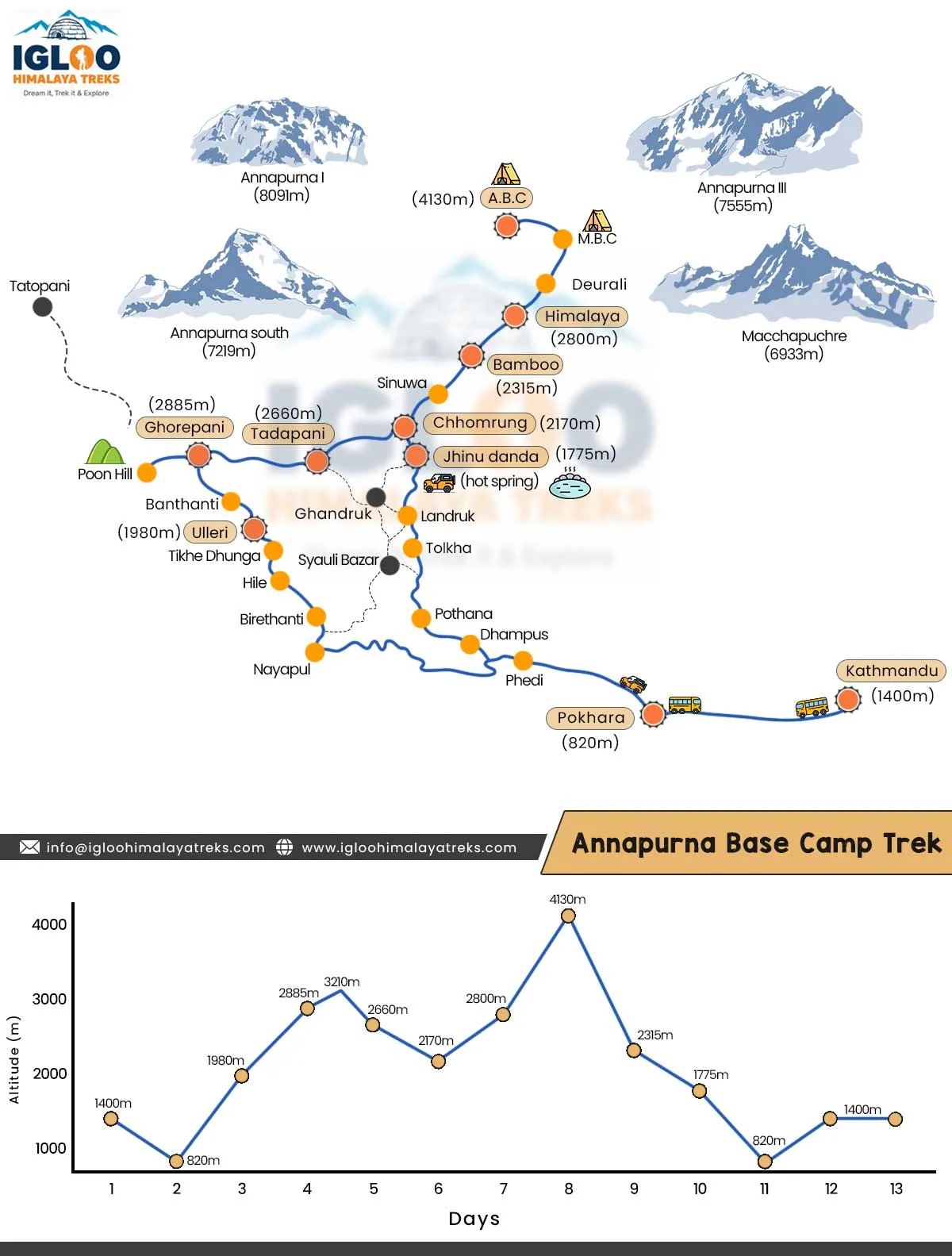
The geography of the upper Modi Khola creates a natural avalanche funnel between Deurali (3,200 m) and Machapuchare Base Camp (3,700 m). Sheer granite couloirs funnel snow straight off Hiunchuli and Annapurna South down to the river floor.
Avalanche Seasonality:
- Autumn (October to November): Lowest risk. Summer melt has stripped old snow, and winter storm systems have not yet arrived.
- Mid-Winter (January to February): Moderate risk following heavy blizzard storms. Guides wait 24 to 48 hours for fresh powder to settle.
- Early Spring (March to April): Highest risk. Heavy winter snowpacks begin warming under strong spring sunshine, triggering wet-slab avalanches. Crossings must be completed early in the morning.
9. Trail Crowds & Sanctuary Lodge Capacity: Peak Rush vs Peaceful Shoulder Weeks
Because environmental zoning strictly limits the number of lodges inside the sanctuary (only 5 lodges at ABC and 4 at Deurali), trail timing directly impacts your accommodation comfort:
| Month | Trail Crowd Level | Lodge Availability at ABC | Booking Recommendation |
|---|---|---|---|
| Jan – Feb | Very Low | Dorms nearly empty; private rooms easy | No pre-booking needed |
| March | Moderate | Good availability; warming up | Book 1–2 days ahead |
| April – May | High (Spring Peak) | 100% full; shared dorms standard | Mandatory agency pre-booking |
| June – Aug | Very Low | Empty lodges; some owners closed | Check ahead for open lodges |
| September | Low to Moderate | Clearing monsoon; plenty of beds | Book 1 day ahead |
| October – Nov | Very High (Autumn Peak) | 100% full; dining room overflow | Mandatory agency pre-booking |
| December | Moderate to Low | Plenty of space; winter begins | No pre-booking needed |
10. Photography Guide: Autumn Golden Hour vs Spring Wildflowers and Mist
For landscape photographers and videographers, choosing between autumn and spring depends on your visual storytelling goals:
- Autumn for Razor-Sharp Mountain Massifs: Post-monsoon air has zero particulates, producing tack-sharp details on ice seracs, rock bands, and night starscapes. Night astrophotography inside the sanctuary yields stunning Milky Way panoramas above Annapurna I.
- Spring for Dynamic Nature & Atmospheric Contrast: Spring offers dramatic compositional framing with scarlet rhododendrons in the foreground and towering white peaks behind. Atmospheric clouds drifting through the bamboo forests create moody, ethereal mountain imagery.
11. Seasonal Packing Adjustments: Layering for 25°C Subtropical Valleys vs -12°C Sanctuary Nights
Your gear list must adapt to the specific season you choose:
| Season | Sleeping Bag Rating | Down Jacket Fill | Footwear & Traction | Key Seasonal Accessories |
|---|---|---|---|---|
| Autumn (Oct – Nov) | -10°C (14°F) | 700-fill hooded down jacket | Mid-cut waterproof boots | UV sunglasses, sun hoodie, light fleece gloves |
| Spring (Mar – May) | -10°C (14°F) | 700-fill lightweight down jacket | Mid-cut waterproof boots | SPF 50+ sunscreen, lip balm, polarized lenses |
| Winter (Dec – Feb) | -20°C (-4°F) | 800-fill heavyweight expedition parka | Insulated boots + microspikes | Thermal mittens, balaclava, thermos bottle covers |
| Monsoon (Jun – Aug) | 0°C (32°F) | Light fleece + rain shell | Quick-dry boots + spare socks | Leech socks, full rain poncho, dry bags |
12. Cultural Festivities on Trail: Celebrating Dashain, Tihar & Lhosar with the Gurung Community
Timing your trek to coincide with traditional Nepalese festivals enriches your Himalayan journey with unforgettable cultural warmth:
- Dashain (Late September or October): Nepal’s premier national celebration. In Gurung villages like Ghandruk and Chhomrong, enormous bamboo swings (Ping) are erected. Families gather for tika blessings, feasting, and community singing.
- Tihar / Deepawali (Late October or November): The Festival of Lights. Every teahouse along the trail is decorated with marigold garlands and glowing oil butter lamps. Trekking guides and porters sing traditional Deusi-Bhailo songs around evening dining stoves.
- Tamu Lhosar (Late December / January): The indigenous Gurung New Year, celebrated with traditional costume dances, archery contests, and feast days in Ghandruk.
13. Decision Framework: Which Month Fits Your Personal Travel Priorities?
Use this rapid-selection framework to choose the ideal calendar month for your trek:
- Choose October: If you want the absolute best overall weather, crystal-clear mountain views, and don’t mind busy trails.
- Choose November: If you want dry, sunny days, fewer crowds than October, and don’t mind colder nighttime temperatures.
- Choose April: If you want blooming rhododendrons, green valleys, pleasant daytime temperatures, and a vibrant climbing buzz.
- Choose December: If you prioritize trail solitude, crisp winter air, empty teahouses, and are equipped for sub-zero freezes.
- Choose Late March: If you want to beat the spring crowds and see thawing snow with emerging wildflowers.
Frequently Asked Questions: Best Time to Trek Annapurna Base Camp
Select a category below to explore expert answers to the most common questions travelers ask about Best Time for ABC:
General & Planning
Ready to Experience the Himalayas?
Whether you are preparing for high-altitude trekking, cultural circuits, or alpine summit expeditions, start planning a bespoke journey tailored to your fitness, travel season, and style.